


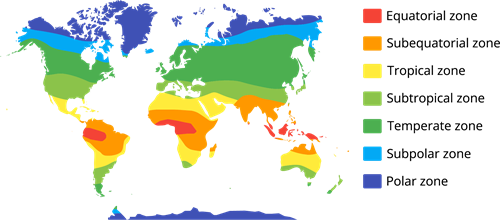
Earth’s climate is not the same everywhere. Different parts of the world belong to different climatic zones, and each zone has its own weather patterns, seasons and natural phenomena. Understanding these zones helps people prepare for both beautiful and dangerous events in nature.
The equatorial zone is hot and wet throughout the year. Heavy precipitation is common there, and a sudden cloudburst or deluge can quickly flood roads and fields. In the morning, dew may appear on leaves and grass, and the day may begin with only a soft breeze. However, the weather can change very quickly.
Near this area is the subequatorial zone, where there are usually clear wet and dry seasons. During the wet season, the monsoon can bring weeks of heavy rain. In coastal regions, a powerful cyclone may form. The calm centre of the storm is called the eye, but this calm can be dangerous because strong winds often return. A sudden gust, bright lightning and loud thunder can make the situation even more frightening. Over the sea, a waterspout may appear as a spinning column of air and water.
The tropical zone is also hot throughout the year. In some places, a long heatwave can become dangerous for people, animals, crops and water supplies. In other areas, a short shower or light drizzle may bring some relief, but it may not solve the problem of drought. Between the tropical and temperate areas lies the subtropical zone, where summers are often hot and winters are mild. However, sudden storms, a short flurry of snow in the mountains, or even a small whirlwind can still surprise people.
The temperate zone has moderate temperatures and clear seasons. Many European countries, including Latvia, are in this zone. Here, people may experience drizzle, showers, strong winds and winter storms. A snowstorm can make roads unsafe, while a snowdrift can block paths and doors. When the thaw begins, snow and ice melt, but falling icicles can become dangerous.
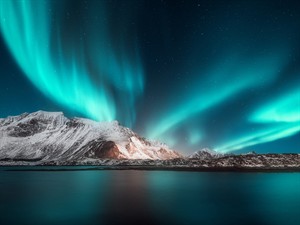
The subpolar zone has long cold winters and short cool summers, while the polar zone is even colder. These regions are difficult places to live, but they are also famous for the aurora. In the northern parts of the world, this natural light display is often called the Northern Lights.
Some natural phenomena are not caused by the weather. Tectonic plates move slowly under the Earth’s surface. When they suddenly shift, they can cause a seismic event such as an earthquake. The point on the Earth’s surface directly above the beginning of the earthquake is the epicentre. After the main earthquake, people may feel an aftershock. Even a small tremor can be frightening because it shows that the ground is not always stable.
Nature can be calm, beautiful and inspiring, but it can also become powerful and dangerous. A breeze, dew or aurora may seem peaceful, while a cyclone, heatwave, snowstorm or earthquake can put people at risk. That is why people should be aware of natural phenomena and understand how climate zones shape life in different parts of the world.
The equatorial zone is hot and wet throughout the year. Heavy precipitation is common there, and a sudden cloudburst or deluge can quickly flood roads and fields. In the morning, dew may appear on leaves and grass, and the day may begin with only a soft breeze. However, the weather can change very quickly.
Near this area is the subequatorial zone, where there are usually clear wet and dry seasons. During the wet season, the monsoon can bring weeks of heavy rain. In coastal regions, a powerful cyclone may form. The calm centre of the storm is called the eye, but this calm can be dangerous because strong winds often return. A sudden gust, bright lightning and loud thunder can make the situation even more frightening. Over the sea, a waterspout may appear as a spinning column of air and water.
The tropical zone is also hot throughout the year. In some places, a long heatwave can become dangerous for people, animals, crops and water supplies. In other areas, a short shower or light drizzle may bring some relief, but it may not solve the problem of drought. Between the tropical and temperate areas lies the subtropical zone, where summers are often hot and winters are mild. However, sudden storms, a short flurry of snow in the mountains, or even a small whirlwind can still surprise people.
The temperate zone has moderate temperatures and clear seasons. Many European countries, including Latvia, are in this zone. Here, people may experience drizzle, showers, strong winds and winter storms. A snowstorm can make roads unsafe, while a snowdrift can block paths and doors. When the thaw begins, snow and ice melt, but falling icicles can become dangerous.
The subpolar zone has long cold winters and short cool summers, while the polar zone is even colder. These regions are difficult places to live, but they are also famous for the aurora. In the northern parts of the world, this natural light display is often called the Northern Lights.
Some natural phenomena are not caused by the weather. Tectonic plates move slowly under the Earth’s surface. When they suddenly shift, they can cause a seismic event such as an earthquake. The point on the Earth’s surface directly above the beginning of the earthquake is the epicentre. After the main earthquake, people may feel an aftershock. Even a small tremor can be frightening because it shows that the ground is not always stable.
Nature can be calm, beautiful and inspiring, but it can also become powerful and dangerous. A breeze, dew or aurora may seem peaceful, while a cyclone, heatwave, snowstorm or earthquake can put people at risk. That is why people should be aware of natural phenomena and understand how climate zones shape life in different parts of the world.
Key vocabulary:
Part 1: Climatic Zones
equatorial zone — [ˌek.wəˈtɔː.ri.əl zəʊn] — the hot climatic zone near the Equator, usually with high temperatures and heavy rainfall throughout the year; ekvatoriālā klimata josla
polar zone — [ˈpəʊ.lər zəʊn] — the very cold climatic zone near the North and South Poles, with long winters and very low temperatures; arktiskā un antarktiskā klimata josla
subequatorial zone — [sʌbˌɛkwəˈtɔːrɪəl zəʊn] — the climatic zone near the equatorial zone, usually with high temperatures and distinct wet and dry seasons; subekvatoriālā klimata josla
subpolar zone — [sʌbˈpəʊlə zəʊn] — the cold climatic zone located close to the polar zone, with short cool summers and long cold winters; subarktiskā un subantarktiskā klimata josla
subtropical zone — [ˌsʌbˈtrɒp.ɪ.kəl zəʊn] — the climatic zone between the tropical and temperate zones, often with warm or hot summers and mild winters; subtropu klimata josla
temperate zone — [ˈtem.pər.ət zəʊn] — the climatic zone between the subtropical and subpolar zones, with moderate temperatures and clear seasons; mērenā klimata josla
tropical zone — [ˈtrɒp.ɪ.kəl zəʊn] — the hot climatic zone near the tropics, usually with high temperatures throughout the year; tropu klimata josla
polar zone — [ˈpəʊ.lər zəʊn] — the very cold climatic zone near the North and South Poles, with long winters and very low temperatures; arktiskā un antarktiskā klimata josla
subequatorial zone — [sʌbˌɛkwəˈtɔːrɪəl zəʊn] — the climatic zone near the equatorial zone, usually with high temperatures and distinct wet and dry seasons; subekvatoriālā klimata josla
subpolar zone — [sʌbˈpəʊlə zəʊn] — the cold climatic zone located close to the polar zone, with short cool summers and long cold winters; subarktiskā un subantarktiskā klimata josla
subtropical zone — [ˌsʌbˈtrɒp.ɪ.kəl zəʊn] — the climatic zone between the tropical and temperate zones, often with warm or hot summers and mild winters; subtropu klimata josla
temperate zone — [ˈtem.pər.ət zəʊn] — the climatic zone between the subtropical and subpolar zones, with moderate temperatures and clear seasons; mērenā klimata josla
tropical zone — [ˈtrɒp.ɪ.kəl zəʊn] — the hot climatic zone near the tropics, usually with high temperatures throughout the year; tropu klimata josla
Part 2: Natural Phenomena
aftershock — [ˈɑːf.tə.ʃɒk] — a smaller earthquake that happens after a larger earthquake; pēcgrūdiens (par zemestrīci)
aurora — [ɔːˈrɔː.rə] —a natural appearance of coloured light in the sky that is usually seen in the latitudes (= parts of the world) nearest the Arctic or Antarctic; polārblāzma
breeze — [briːz] — a light and gentle wind; vējiņš, viegls vējš
cloudburst — [ˈklaʊd.bɜːst] — a sudden, very heavy fall of rain; spēcīga lietusgāze
cyclone — [ˈsaɪ.kləʊn] — a powerful storm with strong circular winds; ciklons
deluge — [ˈdel.juːdʒ] — a very large amount of rain or water that comes suddenly; ļoti stiprs lietus, lietusgāze, plūdi
dew — [djuː] — small drops of water that appear on grass or other surfaces in the morning; rasa
drizzle — [ˈdrɪz.əl] — to rain lightly with very small drops; līņāt, smidzināt, smalks lietus
epicentre (US epicenter) — [ˈep.ɪ.sen.tər] — the point on the Earth’s surface directly above where an earthquake starts; epicentrs
eye — [aɪ] — the calm centre of a strong storm, especially a hurricane or cyclone; vētras acs
flurry — [ˈflʌr.i] — a short period of light snow or rain; (vēja, lietus) brāzma
gust — [ɡʌst] — a sudden strong movement of wind; vēja brāzma, (lietus) gāzma
heatwave — [ˈhiːtˌweɪv] — a period of unusually hot weather; karstuma vilnis
icicle — [ˈaɪ.sɪ.kəl] — a long pointed piece of ice that hangs down from a roof or another surface; lāsteka
lightning — [ˈlaɪt.nɪŋ] — a bright flash of electricity in the sky during a storm; zibens
monsoon — [mɒnˈsuːn] — a season of very heavy rain in some hot countries; musons
Northern Lights (also northern lights) [ˌnɔː.ðən ˈlaɪts] coloured lights that form a pattern and are sometimes seen in the night sky in the most northern parts of the world; ziemeļblāzma
precipitation — [prɪˌsɪp.ɪˈteɪ.ʃən] — water that falls from the sky as rain, snow, sleet or hail; nokrišņi
seismic — [ˈsaɪz.mɪk] — connected with earthquakes or movements inside the Earth; seismisks (saistīts ar zemestrīcēm, tām raksturīgs)
shower — [ˈʃaʊ.ər] — a short period of rain or snow; īslaicīgs lietus vai snigšana
snowdrift — [ˈsnəʊ.drɪft] — a large pile of snow formed by the wind; sniega sanesums, sniega kupena
snowstorm — [ˈsnəʊ.stɔːm] — a storm with a lot of snow; sniega vētra, sniegputenis
tectonic — [tekˈtɒn.ɪk] — connected with the movement of large parts of the Earth’s surface; tektonisks
thaw — [θɔː] — the time when ice or snow melts because the temperature becomes warmer; atkusnis
thunder — [ˈθʌn.dər] — the loud sound heard in the sky during a storm; pērkons
tremor — [ˈtrem.ər] — a small earthquake or a slight shaking movement; viegls pazemes grūdiens, zemestrīces grūdiens
aurora — [ɔːˈrɔː.rə] —a natural appearance of coloured light in the sky that is usually seen in the latitudes (= parts of the world) nearest the Arctic or Antarctic; polārblāzma
breeze — [briːz] — a light and gentle wind; vējiņš, viegls vējš
cloudburst — [ˈklaʊd.bɜːst] — a sudden, very heavy fall of rain; spēcīga lietusgāze
cyclone — [ˈsaɪ.kləʊn] — a powerful storm with strong circular winds; ciklons
deluge — [ˈdel.juːdʒ] — a very large amount of rain or water that comes suddenly; ļoti stiprs lietus, lietusgāze, plūdi
dew — [djuː] — small drops of water that appear on grass or other surfaces in the morning; rasa
drizzle — [ˈdrɪz.əl] — to rain lightly with very small drops; līņāt, smidzināt, smalks lietus
epicentre (US epicenter) — [ˈep.ɪ.sen.tər] — the point on the Earth’s surface directly above where an earthquake starts; epicentrs
eye — [aɪ] — the calm centre of a strong storm, especially a hurricane or cyclone; vētras acs
flurry — [ˈflʌr.i] — a short period of light snow or rain; (vēja, lietus) brāzma
gust — [ɡʌst] — a sudden strong movement of wind; vēja brāzma, (lietus) gāzma
heatwave — [ˈhiːtˌweɪv] — a period of unusually hot weather; karstuma vilnis
icicle — [ˈaɪ.sɪ.kəl] — a long pointed piece of ice that hangs down from a roof or another surface; lāsteka
lightning — [ˈlaɪt.nɪŋ] — a bright flash of electricity in the sky during a storm; zibens
monsoon — [mɒnˈsuːn] — a season of very heavy rain in some hot countries; musons
Northern Lights (also northern lights) [ˌnɔː.ðən ˈlaɪts] coloured lights that form a pattern and are sometimes seen in the night sky in the most northern parts of the world; ziemeļblāzma
precipitation — [prɪˌsɪp.ɪˈteɪ.ʃən] — water that falls from the sky as rain, snow, sleet or hail; nokrišņi
seismic — [ˈsaɪz.mɪk] — connected with earthquakes or movements inside the Earth; seismisks (saistīts ar zemestrīcēm, tām raksturīgs)
shower — [ˈʃaʊ.ər] — a short period of rain or snow; īslaicīgs lietus vai snigšana
snowdrift — [ˈsnəʊ.drɪft] — a large pile of snow formed by the wind; sniega sanesums, sniega kupena
snowstorm — [ˈsnəʊ.stɔːm] — a storm with a lot of snow; sniega vētra, sniegputenis
tectonic — [tekˈtɒn.ɪk] — connected with the movement of large parts of the Earth’s surface; tektonisks
thaw — [θɔː] — the time when ice or snow melts because the temperature becomes warmer; atkusnis
thunder — [ˈθʌn.dər] — the loud sound heard in the sky during a storm; pērkons
tremor — [ˈtrem.ər] — a small earthquake or a slight shaking movement; viegls pazemes grūdiens, zemestrīces grūdiens
Revise: climate is not a new topic for you, is it? You covered it in Form 6: Weather, Temperature and Form 8: Geography of the Earth: Continents, Oceans and Natural Landscapes, The Story of the Earth’s Climate, When Nature Strikes.
Practice: now that you have learned the key vocabulary, it is time to use it in practice. Answer the discussion-type questions, which will help you develop the ability to give longer answers and practise how to express a warning and raise awareness — just as in an English exam or real conversation. For each question, an answer prompt is available to guide you.
Discussion-Type Questions
1. What advice would you give to someone travelling to a very different climatic zone?
"I would advise them to learn about the local climate before travelling. For example, someone going from the temperate zone to the tropical zone should be ready for heat, heavy rain and possibly a monsoon season. Someone travelling to the subpolar zone or polar zone should prepare for extreme cold, snow and ice. Be careful, as familiar weather habits may not be suitable in a different climatic zone. It is safer to check local warnings, pack appropriate clothing and understand the main natural risks of the region."
2. Why might natural hazards be more dangerous in some parts of the world than in others?
"Natural hazards may be more dangerous because of location, climate, buildings, transport and people’s access to information. For example, coastal areas in the subequatorial zone or tropical zone may face cyclones, monsoons or waterspouts, while colder regions may face snowstorms and dangerous ice. The same phenomenon can also have different effects depending on how prepared a community is. People should be aware that risk is not only about nature itself; it is also about preparation. To reduce the risk, governments and communities should improve warning systems and educate people."
3. Why do you think people are often fascinated by natural phenomena, even when they can be dangerous?
"I think people are fascinated by natural phenomena because they show the power and beauty of nature. For example, the Northern Lights and the aurora are visually impressive, while lightning, waterspouts or cyclones can look dramatic and exciting. However, this fascination can sometimes make people forget about safety. People should be aware that a natural phenomenon can be beautiful and dangerous at the same time. It is important to remember that getting too close to extreme weather may put people at serious risk."
4. Some people believe that modern technology can protect us from most natural disasters. To what extent do you agree?
"I agree only partly. Modern technology can help us predict storms, monitor seismic activity and send warnings before dangerous weather arrives. For example, people may receive alerts about a cyclone, a heatwave or heavy precipitation. However, technology cannot stop natural disasters from happening. There is a risk of people becoming too confident and ignoring basic safety rules. To reduce the risk, people should use technology together with preparation, education and responsible behaviour."
5. In your opinion, which climate-related risks are most likely to be underestimated by the public?
"In my opinion, slow or less dramatic risks are often underestimated. A heatwave, for example, may not look as frightening as a snowstorm or a cyclone, but it can seriously affect people’s health, especially vulnerable groups. Light drizzle or a short shower may also seem harmless, but roads can become slippery when temperatures change. People should be aware that danger is not always dramatic or easy to see. This can be dangerous, as people may react too late."
Useful vocabulary for expressing a warning and raising awareness
Be careful, as… — used to give a direct warning and explain the reason for danger
People should be aware that… — used to raise general awareness about an important risk or problem
There is a risk of… — used to describe a possible danger that may happen
This can be dangerous, as… — used to explain why a situation or action may cause harm
It is important to remember that… — used to remind people of an important fact they should not forget
We should not ignore… — used to show that a problem, warning sign or risk deserves attention
It is safer to… — used to suggest a careful action that can reduce danger
To reduce the risk, people should… — used to connect a danger with a practical safety action
If people are not careful, … — used to explain a possible negative result of careless behaviour
This should be taken seriously, as… — used to emphasise that a situation is important and should not be underestimated
People should be aware that… — used to raise general awareness about an important risk or problem
There is a risk of… — used to describe a possible danger that may happen
This can be dangerous, as… — used to explain why a situation or action may cause harm
It is important to remember that… — used to remind people of an important fact they should not forget
We should not ignore… — used to show that a problem, warning sign or risk deserves attention
It is safer to… — used to suggest a careful action that can reduce danger
To reduce the risk, people should… — used to connect a danger with a practical safety action
If people are not careful, … — used to explain a possible negative result of careless behaviour
This should be taken seriously, as… — used to emphasise that a situation is important and should not be underestimated
Revise how to give advice and talk about hypothetical or real situations that you studied in Forms 7, 6, and 10: How to give advice in English , Conditional Type 1, Conditional Type 2, Reflecting on Past Actions Using Conditional Type 3