

The Valley That Wakes Up Before the Sun
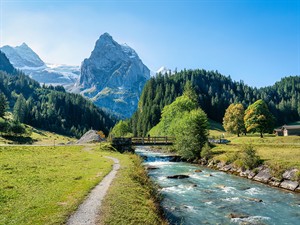
Before sunrise, the countryside is almost silent. A thin mist lies over the valley, and the first light touches the roofs of a small cottage and an old farmhouse. In the distance, a narrow stream runs through the fields, while a smaller brook moves quietly between stones and grass. Higher up in the hills, the water falls over dark rocks and forms a small waterfall. It is a calm, almost magical place, but it is not a lazy one. The countryside wakes up early.
On the dairy farm, the day begins in the cowshed. The farmer opens each stall, checks the cattle, and makes sure the herd has enough fresh hay. Outside, a tall haystack stands near the gate, and a pitchfork leans against the wall. The farmer uses it to move dry grass for the animals. Nearby, a small group of chickens waits inside the coop, while other poultry walk around the yard. Behind the barn, the pigs are already making noise in the pigsty. This farm keeps different kinds of livestock, and each animal has its own place and daily routine.
Across the road, the fields are ready for work. The ground is dark and wet after last night’s rain. In spring, the farmer uses a plough to prepare the soil before planting seeds. Later, a little fertiliser or natural manure is added to help the plants grow well. By summer, the fields are full of wheat and vegetables. In autumn, a large harvester moves slowly across the land and collects the crop. At the edge of one field, a funny old scarecrow stands in a jacket and hat, trying to keep hungry birds away.
Not all countryside work happens in big fields. Beside the farmhouse, there is a kitchen garden where the family grows carrots, onions, herbs and potatoes. A wooden rake is used to make the soil level and collect leaves. Behind the garden, there is an orchard with apple and pear trees. In late summer, the fruit smells sweet, and baskets are filled quickly. Near the trees, an old well still gives cold water from deep under the ground.
Beyond the farm buildings, the land opens into a wide meadow filled with wild flowers. A flock of sheep moves slowly across the grass, while cows feed on rich pasture nearby. The grass is thick and green because the area is wet and fertile. Many visitors say the landscape here is idyllic. The hills, fields and forests create beautiful scenery, especially when the evening sun turns everything golden. It is a natural and lush place, far away from traffic lights, shopping centres and busy roads.
However, country life is not always as easy as it looks. Some services are limited. The nearest clinic, school and large shop may be many kilometres away. In winter, narrow roads can be difficult to use, and people must often solve problems by themselves. If a tree falls across a path, someone may need an axe to cut the wood. If part of the forest is damaged or old trees are removed, a clearing appears among the trees. Work in the countryside can be beautiful, but it can also be physical and tiring.
Still, many people value this way of life because the community is often close-knit. Neighbours help each other during storms, harvest time and family celebrations. Life may look simple or even rustic, but it teaches people to notice the weather, understand animals and respect the land. After a long day, when the animals are fed, the tools are put away and smoke rises from the farmhouse chimney, the countryside feels peaceful and relaxing.
By night, the valley becomes quiet again. The stream continues to move through the dark fields, the orchard disappears into shadow, and the animals rest in their shelters. The countryside is not just a pretty picture. It is a working world of people, animals, soil, water and seasons. It is beautiful because it is alive.
Revise: before moving further, let’s return to what you have already learned about nature and the countryside in Forms 3, 5 and 8: My Countryside, In the Countryside, Geography: Continents, Countries, Climate, and Natural Disasters
Key vocabulary:
axe (US also ax) — [æks] — a tool that has a heavy iron or steel blade at the end of a long wooden handle, used for cutting wood; cirvis
brook — [brʊk] — a small stream; strauts
cattle — [ˈkæt.əl] — a group of animals that includes cows, buffalo, and bison, that are often kept for their milk or meat; liellopi
clearing — [ˈklɪə.rɪŋ] — an area in a wood or forest from which trees and bushes have been removed; (meža) izcirtums, līdums
coop — [kuːp] — a cage (= a small space surrounded by bars, wire, etc.) where small animals are kept, especially chickens; (putnu) sprosts
cottage — [ˈkɒt.ɪdʒ] — a small house, usually in the countryside; neliela lauku māja
cowshed — [ˈkaʊ.ʃed] — a building where cows are kept while they are milked (= have milk taken from them) or where they are kept during winter or bad weather; kūts
crop — [krɒp] — (the total amount collected of) a plant such as a grain, fruit, or vegetable grown in large amounts; augoša labība, raža
dairy farm — [ˈdeə.ri ˌfɑːm] — a farm that only produces milk and products made from milk; piena lopu ferma
farmhouse — [ˈfɑːm.haʊs] — the main house on a farm where the farmer lives; lauku saimniecība
fertiliser (US also fertilizer) — [ˈfɜː.tɪ.laɪ.zər] — a natural or chemical substance that is spread on the land or given to plants, to make plants grow well; mēslojums
flock — [flɒk] — a group of sheep, goats, or birds; (sīklopu) ganāmpulks, (putnu) bars
ground — [ɡraʊnd] — soil, the surface of the earth; zeme, augsne
harvester — [ˈhɑː.vɪ.stər] — a machine for harvesting crops; pļāvējs, pļaujmašīna
hay — [heɪ] — grass that is cut and dried and used as animal food; siens
haystack — [ˈheɪ.stæk] — a large, tall pile of hay in a field; siena kaudze (guba)
herd — [hɜːd] — a large group of animals of the same type that live and feed together; ganāmpulks
kitchen garden — [ˌkɪtʃ.ən ˈɡɑː.dən] — an area, especially a part of a large garden, where fruit, vegetables, and herbs are grown; piemājas dārzs
landscape — [ˈlænd.skeɪp] — a large area of countryside, especially in relation to its appearance; ainava
livestock — [ˈlaɪv.stɒk] — animals and birds that are kept on a farm, such as cows, sheep, or chickens; mājlopi
manure — [məˈnjʊər] — solid waste from animals, especially horses, that is spread on the land in order to make plants grow well; mēsli, mēslojums, mēslot
meadow — [ˈmed.əʊ] — a field with grass and often wild flowers in it; pļava
orchard — [ˈɔː.tʃəd] — an area of land where fruit trees (but not orange trees or other citrus trees) are grown; augļu dārzs
pasture — [ˈpɑːs.tʃər] — grass or similar plants suitable for animals such as cows and sheep to eat, or an area of land covered in this; ganības, ganību zāle
pigsty (US also pigpen) — [ˈpɪɡ.staɪ] — an enclosed area where pigs are kept; cūkkūts
pitchfork — [ˈpɪtʃ.fɔːk] — a tool with a long handle and two or three large curved metal points, used for moving hay (= dried grass) or straw; (siena) dakšas
plough — [plaʊ] — a large farming tool with blades that digs the soil in fields so that seeds can be planted; arkls
poultry — [ˈpəʊl.tri] — birds, such as chickens, that are bred for their eggs and meat; mājputni, mājputnu gaļa, putnkopība
rake — [reɪk] — a garden tool with a long handle and long, pointed metal parts sticking out in a row at the bottom, used for making the earth level or for collecting leaves, etc; grābeklis
scarecrow — [ˈskeə.krəʊ] — a model of a person dressed in old clothes and put in a field of growing crops to frighten birds away; putnu biedēklis
scenery — [ˈsiː.nər.i] — the general appearance of the natural environment, especially when it is beautiful; ainava
stall — [stɔːl] — a small closed area within a farm building in which there is space for one animal to be kept; kabīne
stream — [striːm] — water that flows naturally along a fixed route formed by a channel cut into rock or ground, usually at ground level; strauts
valley — [ˈvæl.i] — an area of low land between hills or mountains, often with a river running through it; ieleja
waterfall — [ˈwɔː.tə.fɔːl] — water, especially from a river or stream, dropping from a higher to a lower point, sometimes from a great height; ūdenskritums
well — [wel] — a deep hole in the ground from which you can get water, oil, or gas; aka
Adjective corner
calm — [kɑːm] — peaceful, quiet, and without worry; mierīgs
close-knit — [ˌkləʊsˈnɪt] — if a group of people are close-knit, they all help and support each other; sakļauts, saliedēts, sasaistīts
idyllic — [ɪˈdɪl.ɪk] — an idyllic place or experience is extremely pleasant, beautiful, or peaceful; idillisks
limited — [ˈlɪm.ɪ.tɪd] — small in amount or number; limitēts, ierobežots
lush — [lʌʃ] — a lush area has a lot of green, healthy plants, grass, and trees; bagātīgs, sulīgs
natural — [ˈnætʃ.ər.əl] — as found in nature and not involving anything made or done by people; dabisks
relaxing — [rɪˈlæk.sɪŋ] — making you feel relaxed; atslābinošs, relaksējošs
rustic — [ˈrʌs.tɪk] — simple and often rough in appearance; typical of the countryside; lauku-; zemnieku-
brook — [brʊk] — a small stream; strauts
cattle — [ˈkæt.əl] — a group of animals that includes cows, buffalo, and bison, that are often kept for their milk or meat; liellopi
clearing — [ˈklɪə.rɪŋ] — an area in a wood or forest from which trees and bushes have been removed; (meža) izcirtums, līdums
coop — [kuːp] — a cage (= a small space surrounded by bars, wire, etc.) where small animals are kept, especially chickens; (putnu) sprosts
cottage — [ˈkɒt.ɪdʒ] — a small house, usually in the countryside; neliela lauku māja
cowshed — [ˈkaʊ.ʃed] — a building where cows are kept while they are milked (= have milk taken from them) or where they are kept during winter or bad weather; kūts
crop — [krɒp] — (the total amount collected of) a plant such as a grain, fruit, or vegetable grown in large amounts; augoša labība, raža
dairy farm — [ˈdeə.ri ˌfɑːm] — a farm that only produces milk and products made from milk; piena lopu ferma
farmhouse — [ˈfɑːm.haʊs] — the main house on a farm where the farmer lives; lauku saimniecība
fertiliser (US also fertilizer) — [ˈfɜː.tɪ.laɪ.zər] — a natural or chemical substance that is spread on the land or given to plants, to make plants grow well; mēslojums
flock — [flɒk] — a group of sheep, goats, or birds; (sīklopu) ganāmpulks, (putnu) bars
ground — [ɡraʊnd] — soil, the surface of the earth; zeme, augsne
harvester — [ˈhɑː.vɪ.stər] — a machine for harvesting crops; pļāvējs, pļaujmašīna
hay — [heɪ] — grass that is cut and dried and used as animal food; siens
haystack — [ˈheɪ.stæk] — a large, tall pile of hay in a field; siena kaudze (guba)
herd — [hɜːd] — a large group of animals of the same type that live and feed together; ganāmpulks
kitchen garden — [ˌkɪtʃ.ən ˈɡɑː.dən] — an area, especially a part of a large garden, where fruit, vegetables, and herbs are grown; piemājas dārzs
landscape — [ˈlænd.skeɪp] — a large area of countryside, especially in relation to its appearance; ainava
livestock — [ˈlaɪv.stɒk] — animals and birds that are kept on a farm, such as cows, sheep, or chickens; mājlopi
manure — [məˈnjʊər] — solid waste from animals, especially horses, that is spread on the land in order to make plants grow well; mēsli, mēslojums, mēslot
meadow — [ˈmed.əʊ] — a field with grass and often wild flowers in it; pļava
orchard — [ˈɔː.tʃəd] — an area of land where fruit trees (but not orange trees or other citrus trees) are grown; augļu dārzs
pasture — [ˈpɑːs.tʃər] — grass or similar plants suitable for animals such as cows and sheep to eat, or an area of land covered in this; ganības, ganību zāle
pigsty (US also pigpen) — [ˈpɪɡ.staɪ] — an enclosed area where pigs are kept; cūkkūts
pitchfork — [ˈpɪtʃ.fɔːk] — a tool with a long handle and two or three large curved metal points, used for moving hay (= dried grass) or straw; (siena) dakšas
plough — [plaʊ] — a large farming tool with blades that digs the soil in fields so that seeds can be planted; arkls
poultry — [ˈpəʊl.tri] — birds, such as chickens, that are bred for their eggs and meat; mājputni, mājputnu gaļa, putnkopība
rake — [reɪk] — a garden tool with a long handle and long, pointed metal parts sticking out in a row at the bottom, used for making the earth level or for collecting leaves, etc; grābeklis
scarecrow — [ˈskeə.krəʊ] — a model of a person dressed in old clothes and put in a field of growing crops to frighten birds away; putnu biedēklis
scenery — [ˈsiː.nər.i] — the general appearance of the natural environment, especially when it is beautiful; ainava
stall — [stɔːl] — a small closed area within a farm building in which there is space for one animal to be kept; kabīne
stream — [striːm] — water that flows naturally along a fixed route formed by a channel cut into rock or ground, usually at ground level; strauts
valley — [ˈvæl.i] — an area of low land between hills or mountains, often with a river running through it; ieleja
waterfall — [ˈwɔː.tə.fɔːl] — water, especially from a river or stream, dropping from a higher to a lower point, sometimes from a great height; ūdenskritums
well — [wel] — a deep hole in the ground from which you can get water, oil, or gas; aka
Adjective corner
calm — [kɑːm] — peaceful, quiet, and without worry; mierīgs
close-knit — [ˌkləʊsˈnɪt] — if a group of people are close-knit, they all help and support each other; sakļauts, saliedēts, sasaistīts
idyllic — [ɪˈdɪl.ɪk] — an idyllic place or experience is extremely pleasant, beautiful, or peaceful; idillisks
limited — [ˈlɪm.ɪ.tɪd] — small in amount or number; limitēts, ierobežots
lush — [lʌʃ] — a lush area has a lot of green, healthy plants, grass, and trees; bagātīgs, sulīgs
natural — [ˈnætʃ.ər.əl] — as found in nature and not involving anything made or done by people; dabisks
relaxing — [rɪˈlæk.sɪŋ] — making you feel relaxed; atslābinošs, relaksējošs
rustic — [ˈrʌs.tɪk] — simple and often rough in appearance; typical of the countryside; lauku-; zemnieku-
Practice: now that you have learned the key vocabulary, it is time to use it in practice. Answer the discussion-type questions, which will help you develop the ability to give longer answers and practise expressing preferences. Revise functional vocabulary on this matter here: Expressing Personal Preferences in English. For each question, an answer prompt is available to guide you.
Discussion-Type Questions
1. Why might some people prefer living in the countryside rather than in a city?
“Some people are drawn to the countryside because it offers a calmer and more natural way of life. They may value open landscapes, cleaner air, a close-knit community and more space than they would usually have in a city. From my perspective, rural life can be especially attractive for people who want to escape traffic, noise and stress. However, I also think this preference depends on a person’s lifestyle, because some people may find the countryside too quiet or limited.”
“Some people are drawn to the countryside because it offers a calmer and more natural way of life. They may value open landscapes, cleaner air, a close-knit community and more space than they would usually have in a city. From my perspective, rural life can be especially attractive for people who want to escape traffic, noise and stress. However, I also think this preference depends on a person’s lifestyle, because some people may find the countryside too quiet or limited.”
2. Do you think the countryside is an ideal place to live, or is this view too romantic?
“I would say that the countryside can be idyllic, but the idea of rural life is sometimes too romantic. Many people have a soft spot for cottages, meadows, orchards and beautiful scenery, but they may forget about the hard work behind this lifestyle. Farmers have to care for livestock, prepare the ground, collect crops and work in difficult weather. In my opinion, the countryside can be a wonderful place, but it should not be seen only as a peaceful picture.”
“I would say that the countryside can be idyllic, but the idea of rural life is sometimes too romantic. Many people have a soft spot for cottages, meadows, orchards and beautiful scenery, but they may forget about the hard work behind this lifestyle. Farmers have to care for livestock, prepare the ground, collect crops and work in difficult weather. In my opinion, the countryside can be a wonderful place, but it should not be seen only as a peaceful picture.”
3. Why do some young people have little interest in countryside life?
“Some young people have no interest in countryside life because they may connect it with limited opportunities. They might feel that rural areas offer fewer schools, jobs, shops, cultural events and social activities. Many teenagers are also not into farming, gardening or looking after animals because these activities may seem physically tiring or old-fashioned. However, I think this view can change if young people see the countryside as a place of knowledge, responsibility and environmental importance.”
“Some young people have no interest in countryside life because they may connect it with limited opportunities. They might feel that rural areas offer fewer schools, jobs, shops, cultural events and social activities. Many teenagers are also not into farming, gardening or looking after animals because these activities may seem physically tiring or old-fashioned. However, I think this view can change if young people see the countryside as a place of knowledge, responsibility and environmental importance.”
4. Should schools encourage students to learn more about rural life and farming?
“I firmly believe schools should encourage students to learn more about rural life and farming. Even if students are not personally hooked on farming, they should understand where food comes from and how much work is needed to produce it. Learning about crops, livestock, fertiliser, manure, orchards and dairy farms can help students respect the countryside more. I think this knowledge is important because modern society often depends on rural work but does not always notice it.”
“I firmly believe schools should encourage students to learn more about rural life and farming. Even if students are not personally hooked on farming, they should understand where food comes from and how much work is needed to produce it. Learning about crops, livestock, fertiliser, manure, orchards and dairy farms can help students respect the countryside more. I think this knowledge is important because modern society often depends on rural work but does not always notice it.”
5. Would you say that countryside work is undervalued in modern society?
“Yes, I think countryside work is often undervalued. Many people enjoy fresh food, milk products and natural landscapes, but they may not think about the farmers who produce and protect them. Some people take pleasure in visiting rural areas at weekends, but they would not want to do the difficult work themselves. Farming requires practical skills, patience and responsibility. In my view, rural work deserves more respect because it supports both everyday life and the economy.”
“Yes, I think countryside work is often undervalued. Many people enjoy fresh food, milk products and natural landscapes, but they may not think about the farmers who produce and protect them. Some people take pleasure in visiting rural areas at weekends, but they would not want to do the difficult work themselves. Farming requires practical skills, patience and responsibility. In my view, rural work deserves more respect because it supports both everyday life and the economy.”
6. Are rural areas mainly places for relaxation, or do they have a wider social role?
“Rural areas are not only places for relaxation; they have a much wider social role. Of course, many people find countryside holidays very enjoyable because they can walk near streams, enjoy scenery and escape city noise. However, the countryside also produces food, protects traditions, supports communities and keeps people connected with nature. In my opinion, it is wrong to see rural areas only as holiday destinations, because they are also working and living environments.”
“Rural areas are not only places for relaxation; they have a much wider social role. Of course, many people find countryside holidays very enjoyable because they can walk near streams, enjoy scenery and escape city noise. However, the countryside also produces food, protects traditions, supports communities and keeps people connected with nature. In my opinion, it is wrong to see rural areas only as holiday destinations, because they are also working and living environments.”
7. Why might some people prefer countryside holidays to city breaks?
“Some people have a preference for countryside holidays because they want peace, space and a slower rhythm. They may enjoy walking through meadows, staying in a rustic cottage, visiting an orchard or listening to a brook instead of spending time in crowded streets. I think rural holidays can help people recover from stress. However, they may not be everyone’s choice, especially if a person is not drawn to quiet places and prefers museums, restaurants or nightlife.”
“Some people have a preference for countryside holidays because they want peace, space and a slower rhythm. They may enjoy walking through meadows, staying in a rustic cottage, visiting an orchard or listening to a brook instead of spending time in crowded streets. I think rural holidays can help people recover from stress. However, they may not be everyone’s choice, especially if a person is not drawn to quiet places and prefers museums, restaurants or nightlife.”
8. Is traditional countryside knowledge still relevant in a modern world?
“Yes, I believe traditional countryside knowledge is still relevant. People may use modern machines such as harvesters, but they still need to understand the ground, weather, crops and animals. Knowing how to use tools such as a rake, pitchfork, axe or plough may also be useful in certain situations. Personally, I am not really into heavy farm work, but I respect these skills because they show independence and practical intelligence. Modern life should not make this knowledge disappear.”
“Yes, I believe traditional countryside knowledge is still relevant. People may use modern machines such as harvesters, but they still need to understand the ground, weather, crops and animals. Knowing how to use tools such as a rake, pitchfork, axe or plough may also be useful in certain situations. Personally, I am not really into heavy farm work, but I respect these skills because they show independence and practical intelligence. Modern life should not make this knowledge disappear.”