

Where Would You Choose to Live?
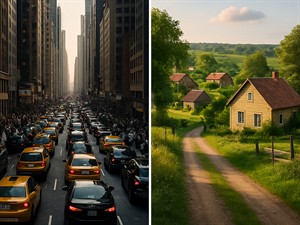
Imagine standing on a hill at sunset. On one side, you can see the bright lights of a growing city. Cars move like shining lines along the roads, tall buildings rise above busy streets, and thousands of people hurry through the evening. On the other side, the land opens into quiet farmland, soft grassland, and small villages where the day ends more slowly. Both places are real. Both places shape people’s lives.
Every region has its own story. Some regions are known for large cities, while others are famous for farms, forests, rivers, or open countryside. In a city, the population is usually dense, and this creates energy. A city dweller may live in a small flat, travel by bus or underground, and pass hundreds of strangers before reaching school or work. For many people, this is an advantage because city life offers more jobs, shops, hospitals, universities, sports centres, and cultural events.
Yet the same city can look very different from one street to the next. One district may be full of modern offices, cafés, and theatres, while another may have older buildings and fewer public services. Some people move uptown because they want a quieter residential area, away from heavy traffic and business streets. Others remain in the inner city, where life is faster, louder, and often more crowded. The city can be exciting, but one serious disadvantage is that noise, expensive housing, traffic jams, and inequality can make everyday life difficult.
Look beyond the last bus stop, and the view begins to change. The environs of a town may include narrow roads, fields, rivers, forests, and villages where people know one another by name. In these places, life may feel more personal. A child may walk past farmland on the way to school or watch the wind move across open grassland in the evening. However, rural life also has challenges. There may be fewer buses, fewer shops, and fewer job opportunities, especially for young people.
Some places are caught between the city and the countryside. An old factory area may become wasteland if it is no longer used. Later, with good planning, the same land might become a park, a housing area, or a community garden. A neighbourhood can also change over time: new families arrive, old buildings are repaired, streets become safer, and local people create a stronger community.
For many people, place is not only about buildings, roads, or fields. It is also about identity. A person’s hometown may stay important even after they move away, because it is connected with childhood memories, family, and first experiences. A homeland can create an even deeper feeling of belonging, especially for people who live far from the country where they were born.
In some parts of the world, cities grow so quickly that they almost join together. Several urban areas can form a megalopolis, a huge connected city region where millions of people live, work, study, and travel every day. Such places show how powerful urban growth can be, but they also remind us that planning matters. Without careful decisions, a city can become overcrowded, polluted, and unfair.
So, where is the best place to live? There is no simple answer. The city offers speed, choice, and opportunity. The countryside offers space, nature, and a slower rhythm. Towns and villages often offer something in between. In the end, every place has its strengths and weaknesses, and understanding them helps us think more carefully about the future of our communities.
Key vocabulary:
advantage — [ədˈvɑːn.tɪdʒ] — a condition giving a greater chance of success; priekšrocība, pārākums
disadvantage — [ˌdɪs.ədˈvɑːn.tɪdʒ] — a condition or situation that causes problems, especially one that causes something or someone to be less successful than other things or people; neizdevīgs stāvoklis, trūkums, traucējums
district — [ˈdɪs.trɪkt] — an area of a country or town that has fixed borders that are used for official purposes, or that has a particular feature that makes it different from surrounding areas; rajons, apgabals, iecirknis
dweller — [ˈdwel.ər] — a person who lives in a city, town, cave, etc.; iemītnieks
environs — [ɪnˈvaɪ.rənz] — the area surrounding a place, especially a town; apkaime, apkārtne
farmland — [ˈfɑːm.lænd] — land that is used for or is suitable for farming; lauksaimniecības zeme
homeland — [ˈhəʊm.lænd] — the country you were born in; dzimtene, dzimtā zeme
hometown — [ˈhəʊm.taʊn] — the town or city that a person is from, especially the one in which they were born and lived while they were young; dzimtā pilsēta
inner city — [ˌɪn.ə ˈsɪt.i] — the central part of a city where people live and where there are often problems because people are poor and there are few jobs and bad houses; (pārapdzīvota, vecām mājām apbūvēta) pilsētas centrālā daļa, geto
grassland — [ˈɡrɑːs.lænd] [ˈɡrɑːs.lənd] — a large area of land covered with grass; pļava, ganības
megalopolis — [ˌmeɡ.əˈlɒp.əl.ɪs] — an extremely large city or urban (= city) area where a lot of people live; pilsētu aglomerācija, megapole
neighbourhood (US neighborhood) — [ˈneɪ.bə.hʊd] — the area of a town that surrounds someone's home, or the people who live in this area; apkaime, apkārtne
population — [ˌpɒp.jəˈleɪ.ʃən] — all the people living in a particular country, area, or place; iedzīvotāji, populācija
region — [ˈriː.dʒən] — a particular area or part of the world, or any of the large official areas into which a country is divided; apgabals; apvidus, rajons
uptown — [ˌʌpˈtaʊn] — in or towards the northern part of a city or town, especially if there is not much business or industry there; (pilsētas) dzīvojamo namu rajoni
wasteland — [ˈweɪst.lænd] — an empty area of land, especially in or near a city, that is not used to grow crops or built on, or used in any way; novārtā pamesta zeme
disadvantage — [ˌdɪs.ədˈvɑːn.tɪdʒ] — a condition or situation that causes problems, especially one that causes something or someone to be less successful than other things or people; neizdevīgs stāvoklis, trūkums, traucējums
district — [ˈdɪs.trɪkt] — an area of a country or town that has fixed borders that are used for official purposes, or that has a particular feature that makes it different from surrounding areas; rajons, apgabals, iecirknis
dweller — [ˈdwel.ər] — a person who lives in a city, town, cave, etc.; iemītnieks
environs — [ɪnˈvaɪ.rənz] — the area surrounding a place, especially a town; apkaime, apkārtne
farmland — [ˈfɑːm.lænd] — land that is used for or is suitable for farming; lauksaimniecības zeme
homeland — [ˈhəʊm.lænd] — the country you were born in; dzimtene, dzimtā zeme
hometown — [ˈhəʊm.taʊn] — the town or city that a person is from, especially the one in which they were born and lived while they were young; dzimtā pilsēta
inner city — [ˌɪn.ə ˈsɪt.i] — the central part of a city where people live and where there are often problems because people are poor and there are few jobs and bad houses; (pārapdzīvota, vecām mājām apbūvēta) pilsētas centrālā daļa, geto
grassland — [ˈɡrɑːs.lænd] [ˈɡrɑːs.lənd] — a large area of land covered with grass; pļava, ganības
megalopolis — [ˌmeɡ.əˈlɒp.əl.ɪs] — an extremely large city or urban (= city) area where a lot of people live; pilsētu aglomerācija, megapole
neighbourhood (US neighborhood) — [ˈneɪ.bə.hʊd] — the area of a town that surrounds someone's home, or the people who live in this area; apkaime, apkārtne
population — [ˌpɒp.jəˈleɪ.ʃən] — all the people living in a particular country, area, or place; iedzīvotāji, populācija
region — [ˈriː.dʒən] — a particular area or part of the world, or any of the large official areas into which a country is divided; apgabals; apvidus, rajons
uptown — [ˌʌpˈtaʊn] — in or towards the northern part of a city or town, especially if there is not much business or industry there; (pilsētas) dzīvojamo namu rajoni
wasteland — [ˈweɪst.lænd] — an empty area of land, especially in or near a city, that is not used to grow crops or built on, or used in any way; novārtā pamesta zeme
Practice: now that you have learned the key vocabulary, it is time to use it in practice. Answer the discussion-type questions, which will help you develop the ability to give longer answers and practise giving an explanation and providing examples. Revise functional vocabulary on this matter here: The Green Talk: Navigating Eco-Travel with Respect. For each question, an answer prompt is available to guide you.
Discussion-Type Questions
1. Why do many people choose to live in a city?
"In my view, many people choose to live in a city because of the opportunities it offers. One strong reason is that the population is usually dense, which means that there are more jobs, shops, hospitals, universities, and cultural events nearby. For instance, a young person who lives in the inner city may have easier access to education, public transport, and entertainment. That is why city life can be attractive for people who want an active lifestyle. However, I also understand that city life has disadvantages, such as traffic jams, expensive housing, and noise."
"In my view, many people choose to live in a city because of the opportunities it offers. One strong reason is that the population is usually dense, which means that there are more jobs, shops, hospitals, universities, and cultural events nearby. For instance, a young person who lives in the inner city may have easier access to education, public transport, and entertainment. That is why city life can be attractive for people who want an active lifestyle. However, I also understand that city life has disadvantages, such as traffic jams, expensive housing, and noise."
2. Do you think living in the countryside is better than living in a city?
"To some extent, I agree that living in the countryside can be better because of the quieter environment and slower rhythm of life. Since rural areas often include farmland, grassland, forests, and villages, people may feel closer to nature. For instance, instead of seeing tall buildings and crowded streets every day, a person may see open fields and quiet roads. This shows that the countryside can offer more space and calm. At the same time, it may be more difficult to live there due to fewer buses, shops, schools, and job opportunities."
3. Why might some people move from the inner city to an uptown area?
"Some people may move from the inner city to an uptown area because they want a quieter and more residential place to live. One strong reason is that the inner city can be faster, louder, and more crowded. For this reason, families may prefer neighbourhoods with less traffic, more space, and safer streets. For instance, a neighbourhood with repaired buildings, parks, and local community spaces may feel more comfortable for everyday life. In other words, people may not want to leave the city completely, but they may want a calmer part of it."
"Some people may move from the inner city to an uptown area because they want a quieter and more residential place to live. One strong reason is that the inner city can be faster, louder, and more crowded. For this reason, families may prefer neighbourhoods with less traffic, more space, and safer streets. For instance, a neighbourhood with repaired buildings, parks, and local community spaces may feel more comfortable for everyday life. In other words, people may not want to leave the city completely, but they may want a calmer part of it."
4. Can a place influence a person’s identity?
"Yes, I believe that a place can strongly influence a person’s identity. A person’s hometown may remain important because of childhood memories, family history, and first experiences. For instance, even if someone moves to another region or country, they may still feel emotionally connected to the place where they grew up. This can be even stronger when people think about their homeland, especially if they live far away from it. This shows that a place is not only about buildings, roads, or fields; it is also about belonging."
"Yes, I believe that a place can strongly influence a person’s identity. A person’s hometown may remain important because of childhood memories, family history, and first experiences. For instance, even if someone moves to another region or country, they may still feel emotionally connected to the place where they grew up. This can be even stronger when people think about their homeland, especially if they live far away from it. This shows that a place is not only about buildings, roads, or fields; it is also about belonging."
5. Why is careful planning important when cities grow very quickly?
"Careful planning is important because a fast-growing city can become overcrowded, polluted, and unfair. Since several urban areas can join together and form a megalopolis, millions of people may need housing, transport, schools, hospitals, and green spaces. If this growth is not planned well, some districts may become too crowded, while others may lack important services. For instance, an old wasteland area could be turned into a park, a housing area, or a community garden. That is why good planning can help a city grow in a more balanced and healthier way."
"Careful planning is important because a fast-growing city can become overcrowded, polluted, and unfair. Since several urban areas can join together and form a megalopolis, millions of people may need housing, transport, schools, hospitals, and green spaces. If this growth is not planned well, some districts may become too crowded, while others may lack important services. For instance, an old wasteland area could be turned into a park, a housing area, or a community garden. That is why good planning can help a city grow in a more balanced and healthier way."
Atsauce:
Picture “Big city and small town”: AI / Shutterstock.com