

Learning English is easy. Right? Write? Wright? Rite? Wait a moment — which word do we actually need? When you hear these four words, they sound exactly the same. However, they do not mean the same thing:
- "right" can mean correct;
- "write" means to form words on a page or screen;
- "a wright" is a person who makes or builds something;
- "rite" is a formal ceremony or traditional act, especially one connected with religion or an important stage of life.
English is full of words that play this kind of trick. Is the weather changing, or have you decided whether to take an umbrella? Did their team win, or are they’re celebrating over there? Are you going to buy two tickets too? The sound alone will not give you the answer. You will need to investigate the context, notice the clues and choose the correct spelling. Get ready to crack the homophone code!
homophone — [ˈhɒm.ə.fəʊn] — a word that sounds the same as another word but has a different meaning, or a different spelling and meaning; homofons
The words "sea" and "see" form a common homophone pair.
Now let’s explore some common homophone pairs and discover how context helps us choose the correct word.
1. which / witch

which (pronoun, determiner) — [wɪtʃ] — used when referring to a particular thing or person; kurš, kura, kuri, kuras
Today I am wearing a gray suit which I bought in London.
Today I am wearing a gray suit which I bought in London.

witch (noun) — [wɪtʃ] — a woman believed to have magical powers; ragana
In old stories, a witch often lives in a dark forest.
2. here / hear

here (adverb) — [hɪər] — in this place; šeit, te
The boy pointed to the spot beside him and said, “Please stand here.”

hear (verb) — [hɪər] — to notice a sound with your ears; dzirdēt
Can you hear that music? Oh, yes! It sounds wonderful!
3. one / won

one (number, determiner) — [wʌn] — the number 1; viens, viena
The runner in lane one is ready for the race.
The runner in lane one is ready for the race.

won (verb) — [wʌn] — the past simple form of win; uzvarēja, vinnēja
I recently won a competition.
4. weather / whether

weather (noun) — [ˈweð.ər] — the condition of the atmosphere, for example rain, sun or wind; laikapstākļi
The weather is very nice today.

whether (conjunction) — [ˈweð.ər] — used when talking about a choice or alternatives; vai
Could you tell me whether you would prefer to go out or stay in?
5. hair / hare

hair (noun) — [heə] — the strands that grow on a person’s head or on an animal’s body; mati, apmatojums
The woman has long, wavy brown hair that falls over her shoulders.

hare (noun) — [heə] — a wild animal similar to a rabbit, but usually larger and able to run very quickly; zaķis
As we walked across the field, a brown hare suddenly appeared and raced towards the forest.
6. hole / whole

hole (noun) — [həʊl] — an empty space or opening in the ground, in an object or in a surface; caurums, bedre
There was a large hole in the brick wall where several bricks had fallen out.
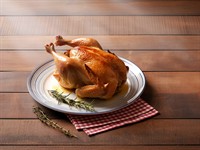
whole (adjective) — [həʊl] — complete or including every part of something; vesels, viss, viss kopumā
The restaurant served a whole roasted chicken with herbs and a rich, golden-brown skin.
7. plain / plane

plain (adjective) — [pleɪn] — simple in style, without a pattern, decoration or special details; vienkāršs, bez raksta, neizrotāts
The young woman is wearing a plain dark-green sweatshirt without any pictures or patterns.
The young woman is wearing a plain dark-green sweatshirt without any pictures or patterns.

plane (noun) — [pleɪn] — an aircraft with wings and engines that carries people or goods through the air; lidmašīna
The passenger plane is landing on the runway as the sun sets behind the mountains.
The passenger plane is landing on the runway as the sun sets behind the mountains.
8. wait / weight

wait (verb, noun) — [weɪt] — to stay in one place or delay doing something until someone arrives or something happens; gaidīt, uzgaidīt, gaidīšana, gaidīšanas laiks
The woman is waiting patiently for her appointment and checking the time on her watch.

weight (noun, verb) — [weɪt] — how heavy a person or object is; svars, noslogot, padarīt smagāku, piešķirt lielāku nozīmi
The woman is standing on the scales to check her weight.
9. right / write

right (adjective / adverb / noun) — [raɪt] — correct; also the direction opposite to left; pareizs, pa labi, labā puse
You are right: this answer is correct.
You are right: this answer is correct.

write (verb) — [raɪt] — to form words on paper or on a screen; rakstīt
Please write your name at the top of the page.
10. see / sea

see (verb) — [siː] — to notice something with your eyes; redzēt
Can you see the lighthouse in the distance?

sea (noun) — [siː] — a large area of salt water; jūra
The small village is located near the sea.
11. meet / meat

meet (verb) — [miːt] — to come together with someone; satikt, satikties
Let us meet outside the cinema at six o’clock.

meat (noun) — [miːt] — the flesh of animals used as food; gaļa
The restaurant serves both vegetarian and meat dishes.
12. break / brake

break (verb / noun) — [breɪk] — to damage something so that it separates into pieces; also a short pause; salauzt, pārtraukums
Be careful not to break the glass.

brake (noun / verb) — [breɪk] — a device used to slow down or stop a vehicle; to slow down or stop a vehicle; bremze, bremzēt
Press the brake gently when you approach the crossing.

piece (noun) — [piːs] — a part or portion of something; gabals, daļa
Would you like a piece of cake?

peace (noun) — [piːs] — a state of calm or freedom from conflict; miers
The community hoped to live in peace.

flower (noun) — [flaʊər] — the colourful part of a plant; zieds, puķe
She placed a yellow flower in a glass vase.

flour (noun) — [flaʊər] — a fine powder usually made from grain and used in baking; milti
You need some flour to bake a cake.
15. pair / pear
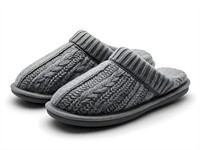
pair (noun) — [peər] — two matching or related things; pāris
I bought a new pair of shoes.

pear (noun) — [peər] — a sweet fruit with a rounded base and a narrower top; bumbieris
She picked a ripe pear from the tree.
16. week / weak

week (noun) — [wiːk] — a period of seven days; nedēļa
We are going on holiday for a week.

weak (adjective) — [wiːk] — lacking physical strength or power; vājš
He still felt weak after being ill.
17. know / no

know (verb) — [nəʊ] — to have information or knowledge about something; zināt
Do you know the answer to this question?

no (determiner) — [nəʊ] — used to express a negative answer or refusal; nē, nekāds
She shook her head and said, “No.”
18. night / knight

night (noun) — [naɪt] — the period of darkness between sunset and sunrise; nakts
The stars were bright in the sky at night.

knight (noun) — [naɪt] — a soldier in armour, especially in the Middle Ages; bruņinieks
The knight rode through the forest on a white horse.
Tip Corner: How to Understand Words That Sound the Same
Homophones sound the same, so the sound alone may not tell you which word is meant. Pay attention to the context — the meaning of the sentence and the words around the homophone.
Homophones sound the same, so the sound alone may not tell you which word is meant. Pay attention to the context — the meaning of the sentence and the words around the homophone.
- Think about the meaning of the complete sentence.
- Notice the clues in the words around the homophone.
- Check whether you need a noun, verb, adjective or another part of speech.