


Something unusual is happening at school next week…
The main hall is going to be locked after lunch.
The windows are going to be covered with black paper.
A large screen is going to be installed.
Old photographs are going to be brought from the library.
The best student projects are going to be displayed.
Parents are going to be invited to a special evening event.
Can you guess what is being prepared?
The main hall is going to be locked after lunch.
The windows are going to be covered with black paper.
A large screen is going to be installed.
Old photographs are going to be brought from the library.
The best student projects are going to be displayed.
Parents are going to be invited to a special evening event.
Can you guess what is being prepared?
In these sentences, we do not focus on who is doing the work. We focus on what is going to happen to the hall, the windows, the photographs and the projects. This is the passive voice.
Revise: this is not a new topic for you, is it? Revise what you have already learned about the passive voice in Form 8: Passive Voice: A Mystery Without a Name, Future Simple Passive: When the Future Is Announced
Before you continue with the passive, revise future forms from the previous unit: What’s Next? Ways to Express Future
In a nutshell:
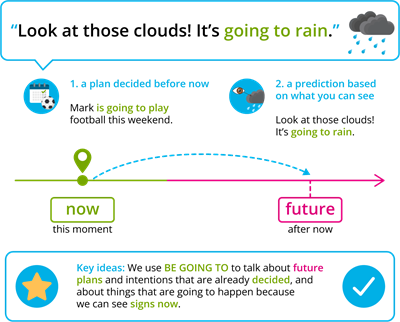
Future with "be going to"
Learn: now let’s see how "be going to" changes when we use it in the passive voice.
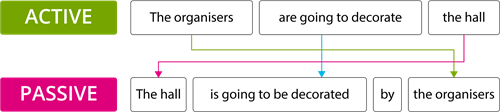
Affirmative: Subject + am / is / are + going to be + past participle
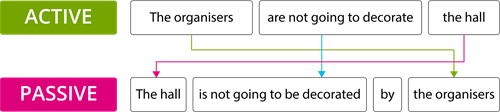
Negative: Subject + am / is / are + not + going to be + past participle
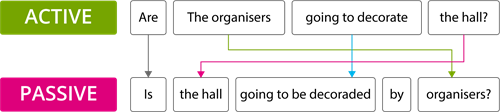
Question: Am / Is / Are + subject + going to be + past participle?
Strategy: How to Find the Object
To find the object, follow these steps:
1. Find the action. Look for the verb phrase, for example: “will organise,” “is painting,” “is going to build.”
2. Find who does the action. This is the subject, not the object. Example: “The school” will organise something.
3. Ask “what?” or “who?” after the action. The school will organise "what"? A careers fair.
4. Choose the whole answer phrase. The object may be more than one word: “a careers fair,” “a stage backdrop,” “permission slips.”
Remember:
a) The object is not the person doing the action.
b) The object is not the verb.
c) The object is not usually the time, place or purpose.
To find the object, follow these steps:
1. Find the action. Look for the verb phrase, for example: “will organise,” “is painting,” “is going to build.”
2. Find who does the action. This is the subject, not the object. Example: “The school” will organise something.
3. Ask “what?” or “who?” after the action. The school will organise "what"? A careers fair.
4. Choose the whole answer phrase. The object may be more than one word: “a careers fair,” “a stage backdrop,” “permission slips.”
Remember:
a) The object is not the person doing the action.
b) The object is not the verb.
c) The object is not usually the time, place or purpose.
Svarīgi!
Remember!
Use passive voice when the action is more important than the doer.
After "going to", do not forget "be".
Use passive voice when the action is more important than the doer.
After "going to", do not forget "be".
The main verb must be in the past participle form. Revise past participle forms for irregular verbs here: Common Irregular Verbs. Table
"by + agent" is possible, but it is often omitted.
"by + agent" is possible, but it is often omitted.