

Take a look: a week can get busy fast – messages, tests, plans, meet-ups and all the little things in between. This diary page is a snapshot of real teen life, where every day brings something new and the future is already starting to take shape.
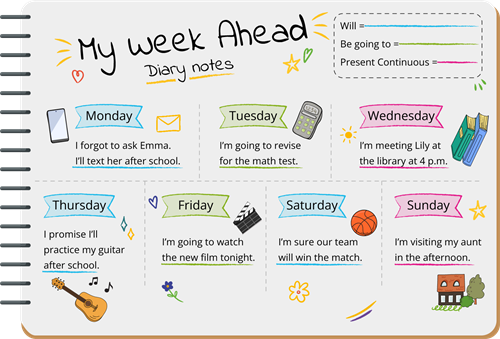
Learn: one busy week, three ways to talk about the future: "will", "be going to" and the Present Continuous.
Revise what you have already studied before!
Form 3: Present Progressive. Form 8: Influence of Media in Sports. Present Continuous
In a nutshell:
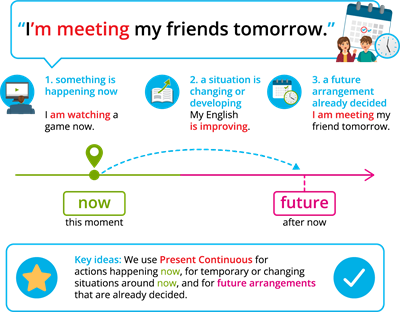
Form: be + ing-verb
Form 5: Usage of "Be going to".
In a nutshell:
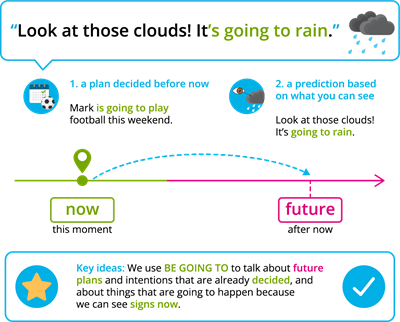
Form: be + going to + verb in the base form
Form 6: Future Simple. WILL, Form 8: The Influencer’s Damage Control
In a nutshell:
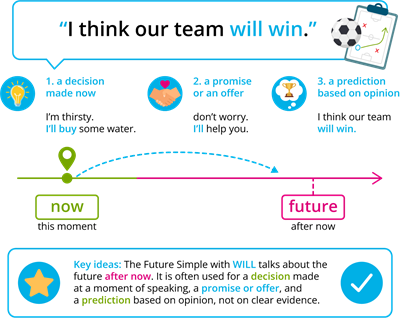
Form: will + verb in the base form
Learn:
Part 1: Predictions
prediction — [prɪˈdɪk.ʃən] — a statement about what you think will happen in the future; pareģošana, pareģojums, prognozēšana
Despite my friend's bold prediction that our team would lose, we ended up winning the championship.
Use "will" when you make a prediction based on what you think, believe or expect.
I’m sure our class will do well in the project.
Use "be going to" when the prediction is based on signs or evidence now.
Be careful! You’re going to drop your phone.
Svarīgi!
Both forms talk about the future. The difference is the reason for the prediction: "will" often comes from an opinion, but "be going to" comes from something visible or known now.
Part 2: Decisions
decision — [dɪˈsɪʒ.ən] — a choice that you make about something after thinking about several possibilities; lēmums, apņemšanās
She has had to make some very difficult decisions.
Use "will" for a decision made at the moment of speaking.
This exercise is difficult. I’ll ask the teacher for help.
We don’t have enough chairs. I’ll bring one from the next room.
Use "be going to" for a decision that was already made before speaking. It shows an intention or a plan.
Alex is going to join the school newspaper this year.
We’re going to visit the open day on Saturday.
Svarīgi!
Both forms can show a future decision, but the timing is different. With "will", the decision happens now. With "be going to", the decision already existed before the sentence was spoken.
Part 3: Arrangements
arrangement — [əˈreɪndʒ.mənt] — a plan for how something will happen; noruna, kārtība
They'd made all the arrangements for the party.
Use the Present Continuous when the future action is already organised. There is usually a clear time, place or another person involved. The plan is not only an idea — it is fixed in someone’s schedule.
We’re visiting the science museum tomorrow. (The visit is already organised.)
My brother is taking his driving test next week. (The test has a fixed date.)
Use "be going to" when the speaker focuses on an intention or plan. The person has decided to do something, but the sentence does not always show that the details are fixed.
We’re going to visit the science museum. (The class has this intention, but the sentence does not make the arrangement sound as fixed.)
My brother is going to take his driving test soon. (He has decided to do it, but the sentence focuses more on the plan than on the exact arrangement.)
Svarīgi!
Both forms talk about the future. The difference is how fixed the future action is: "be going to" often shows a plan in the speaker’s mind; the Present Continuous often shows a plan that is already arranged in real life.