


PIRMĀ SEMESTRA NOSLĒGUMA TESTI
Infinitive and Gerunds
Infinitive is the base form of a verb, often preceded by to.
For example, to eat, to play, to study.
Gerund is the -ing form of a verb that functions as a noun.
Gerund is the -ing form of a verb that functions as a noun.
For example, eating, playing, studying.
Usage
Usage
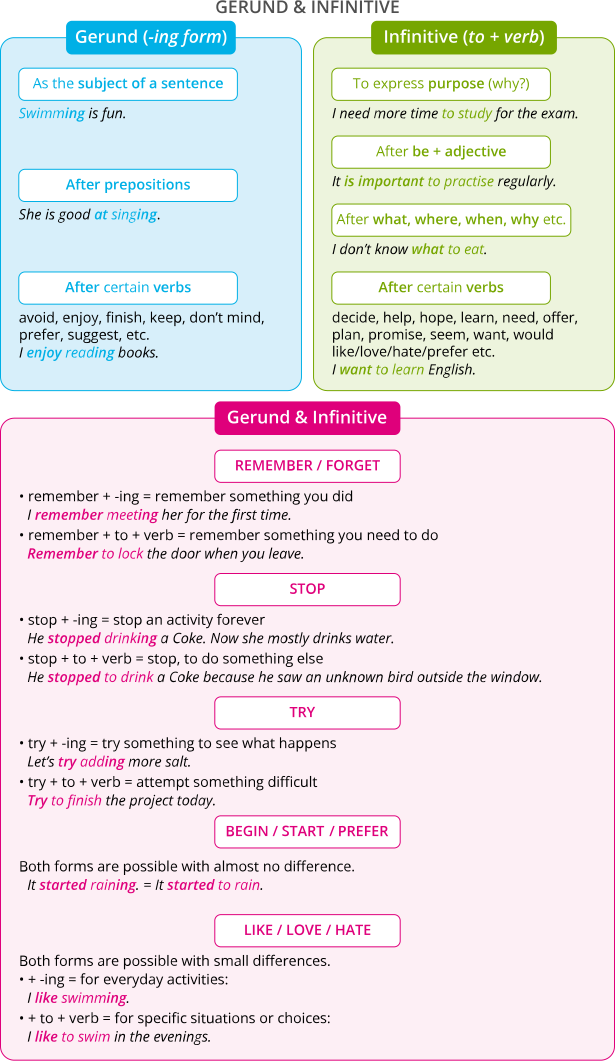
Infinitive is used:
- to express purpose: I go to the gym to exercise;
- some certain verbs are followed by an infinitive – agree, aim, arrange, ask, choose, continue, decide, demand, fail, help, hope, intend, learn, manage, mean, need, offer, plan, prefer, prepare, promise, refuse, seem, want, wish, would like/love/hate/prefer, etc.;
I want to learn English.
- after be + adjectives: It is important to practise regularly.
- after what, where, when, why etc.: I don't know what to do.
Gerund is used:
- as the subject of a sentence: Swimming is fun.
- after prepositions: She is good at drawing.
- some certain verbs are followed by a gerund – admit, advise, allow, avoid, celebrate, delay, discuss, dislike, don't mind, enjoy, escape, explain, fancy, fear, finish, forgive, keep, mention, miss, put off, recommend, report, suggest, support, understand, etc.
I enjoy reading books.
Verbs that can use both forms (gerund or infinitive)
Some verbs can take -ing or to + verb, but the meaning can change.
REMEMBER / FORGET
- remember + -ing = remember something you did
I remember meeting her for the first time.
- remember + to + verb = remember something you need to do
"Remember to lock the door!" my mum reminded me before leaving the house.
STOP
- stop + -ing = stop an activity for ever
He stopped drinking a Coke.
- stop + to + verb = stop, in order to do something else
He stopped to drink a Coke because he saw an unknown bird outside the window.
TRY
- try + -ing = try something to see what happens
Try adding more salt.
- try + to + verb = attempt something difficult
Try to finish the project today.
BEGIN / START / PREFER
Both forms are possible with almost no difference.
It started raining. = It started to rain.
LIKE / LOVE / HATE
Both forms are possible with small differences.
- + -ing = for everyday activities;
I like swimming.
- + to + verb = for specific situations or choices:
I like to swim in the evenings.
FORMATION
Infinitive
- To form an infinitive in an affirmative sentence, add "to" before the base verb.
to + play = to play: I promised my sister to play with her after dinner.
to + read = to read: Sue learnt to read when she was only 6 years old.
- To form an infinitive in a negative sentence, add "not to" before the base verb.
not + to + play = not to play; Harald decided to change, and therefore, plans not to play computer games so late at night.
not + to + read = not to read; Timothy promised himself not to read only the tabloid press, but also to read articles with serious content.
Gerund
- To form a gerund in an affirmative sentence, take the base verb and add -ing to it.
play + -ing = playing; My role model enjoys playing sports because it keeps him healthy and active.
read + -ing = reading; She spends a lot of time reading about people who have made positive changes in the world.
- To form a gerund in a negative sentence, take the base verb and add -ing to it, and put "not" before the gerund.
not + play + -ing = playing; A good role model encourages not playing video games all day and using time wisely instead.
not + read + -ing = reading; They say that not reading useful books can make it harder to learn from inspiring people.
Svarīgi!
Repeat the spelling rules of gerunds (the same as Present Continuous)
Summary
You studied about physical appearance of a person in the first topic. Before exploring new vocabulary, take a look if you remember what has already been learnt: Character, Physical Description
ROLE MODEL
A good role model has many important qualities. They are brave and try to face difficult situations without giving up. They are kind and help people who have problems. A good role model is understanding because they can see how others feel. They always try to do things well and be excellent in the things they do. They show respect to everyone, even if they are different.
A good role model is honest, so people can trust them. They are also generous and like to give their time and support to others. They give people a motive to do their best. They have self-control, which helps them work hard and follow their goals. A good role model is wise and uses their experience to help others learn and grow. All these qualities make them a great example and an inspiration for others.
Word bank:

brave — [breɪv] — (adj) showing no fear of dangerous or difficult things; drosmīgs
She was very brave to learn to ski at 50.

kind — [kaɪnd] — (adj) generous, helpful, and thinking about other people's feelings; laipns
It's very kind of you to help us.

understanding — [ˌʌn.dəˈstæn.dɪŋ] — (noun) a positive relationship between two people or groups in which they feel sympathy for each other; saprašanās;
— (adj) an understanding person who has the ability to know how other people are feeling, and can forgive them if they do something wrong; saprotošs.
He had expected her to be horrified, but she was actually very understanding.

excellent — [ˈek.səl.ənt] — (adj) extremely good; izcils, teicams
The team worked hard to be excellent in their project.

generous — [ˈdʒen.ər.əs] — (adj) willing to give money, help, kindness, etc., especially more than is usual or expected; dāsns, devīgs
He was so generous that made a big difference to the children's charity.

honest — [ˈɒn.ɪst] — (adj) telling the truth or able to be trusted and not likely to steal, cheat, or lie; godīgs
I'd like you to give me an honest answer.

motive — [ˈməʊ.tɪv] — (noun) a reason for doing something; motīvs, iemesls
Does he have a motive for lying about where he was?

respect — [rɪˈspɛkt] — a feeling or attitude of admiration and regard; cieņa
We should always show respect to our teachers and elders.

self-control — [ˌself.kənˈtrəʊl] — the ability to control feelings and behaviour; paškontrole
She showed good self-control and didn’t get angry.

wise — [waɪz] — (adj) having or showing the ability to make good judgments, based on a deep understanding and experience of life; gudrs
It was a wise decision to ask for help.