

Read and listen to the text. Try to figure out the meaning of the highlighted words from the context.
The List That Changed Everything
Alex had never thought of himself as an adventurous person. He had one clear interest: writing. In his leisure time, he often stayed in his room, worked on blogging projects, wrote private thoughts in his journalling notebook, did a few minutes of meditation, or made tiny paper animals with origami.
Then, one rainy afternoon, Alex found a strange list inside an old library book. At the top it said: "Try five things that scare you a little."
The first challenge was backpacking, so Alex filled a large backpack with food, water and a map, then spent a whole day walking through the forest. The next one was mountain biking. The trail was steep and muddy, and Alex had to ride over stones, roots and sharp turns.
After that, was go-karting at a summer festival. Alex put on a helmet, sat in a small racing car and drove around the track faster than he expected. When he stepped out of the car, he heard music nearby and saw a cheerleading team performing for the crowd. They jumped, clapped and moved together in perfect time, and their energy made everyone cheer.
Later, Alex tried windsurfing on the lake. Standing on a board and holding a sail was harder than it looked, especially when the wind suddenly changed. Then came scuba diving in a training pool, where Alex breathed through special equipment and saw the world go quiet under the water.
The last word on the list was skydiving. Alex looked up and saw people jumping from a plane, then floating down under bright parachutes. He was not ready for that challenge yet.
But that evening, Alex opened his notebook and wrote: "I do not have to become a different person. I just have to discover more of who I already am."
The last word on the list was skydiving. Alex looked up and saw people jumping from a plane, then floating down under bright parachutes. He was not ready for that challenge yet.
But that evening, Alex opened his notebook and wrote: "I do not have to become a different person. I just have to discover more of who I already am."
Revise: before we begin the new challenge, let’s wake up your memory. You already know many words about free-time activities and hobbies. Think of this as your vocabulary warm-up before the real adventure begins. Ready? Click, revise and get your brain into English mode! Form 5: Free time activities I, Free time activities II, Free time activities III
General Topic Words
A strong interest in photography can help a student notice beauty in everyday life.
interest — [ˈɪn.trest] — something that you enjoy learning about or doing; interese
A strong interest in photography can help a student notice beauty in everyday life.
leisure — [ˈleʒ.ər] — free time when you are not working or studying; brīvais laiks
During their leisure time, students can relax, be creative or try something new.
Interests and Hobbies

backpacking — [ˈbækˌpæk.ɪŋ] — travelling on foot or by public transport while carrying your things in a backpack; ceļošana ar mugursomu
Backpacking teaches students independence, planning and confidence in unfamiliar places.

blogging — [ˈblɒɡ.ɪŋ] — writing posts online about your thoughts, experiences or interests; emuāru rakstīšana / blogošana
Blogging helps students share ideas, improve their writing and build a creative online voice.

cheerleading — [ˈtʃɪəˌliː.dɪŋ] — performing organised chants, jumps and movements to support a sports team; karsējmeiteņu/karsēju aktivitātes
Cheerleading develops teamwork, energy, rhythm and confidence in front of an audience.

go-karting / go-carting — [ˈɡəʊˌkɑː.tɪŋ] — driving small racing cars on a special track; braukšana ar kartingiem
Go-karting is exciting for students who enjoy speed, quick decisions and friendly competition.

journalling / journaling — [ˈdʒɜː.nəl.ɪŋ] — regularly writing about your thoughts, feelings, plans or experiences; dienasgrāmatas rakstīšana
Journalling helps students understand their emotions and reflect on their personal progress.

meditation — [ˌmed.ɪˈteɪ.ʃən] — a quiet activity where you focus your mind and relax your body; meditācija
Meditation helps students reduce stress, focus better and feel calmer before important tasks.

mountain biking — [ˈmaʊn.tɪn ˌbaɪ.kɪŋ] — riding a bicycle on rough paths, hills or forest trails; kalnu riteņbraukšana
Mountain biking is perfect for students who enjoy adventure, nature and physical challenge.

origami — [ˌɒr.ɪˈɡɑː.mi] — the art of folding paper into shapes, animals or objects; origami / papīra locīšanas māksla
Origami trains to follow instructions carefully and turn a simple piece of paper into something amazing.

scuba diving — [ˈskuː.bə ˌdaɪ.vɪŋ] — swimming underwater with special breathing equipment; niršana ar akvalangu
Scuba diving lets people explore underwater worlds and discover colourful sea life.

skydiving — [ˈskaɪˌdaɪ.vɪŋ] — jumping from a plane and falling through the air before opening a parachute; lēkšana ar izpletni
Skydiving is an unforgettable activity for people who love courage, adrenaline and breathtaking views.

windsurfing — [ˈwɪndˌsɜː.fɪŋ] — moving across water on a board with a sail; vindsērfings
Windsurfing combines balance, strength and the excitement of using the wind to move across the water.
Read and listen to the text. Try to figure out the meaning of the highlighted words from the context.
Lessons That Build Real-Life Skills
School subjects and afterschool activities can help students discover what they enjoy and what they are good at.
In algebra, students use letters and symbols to solve number problems. For example, they may need to find the missing value in an equation. In geometry, they work with shapes, lines, angles and measurements, so they can understand how space and design work.
Some subjects connect strongly with real life. In economics, students learn about money, prices, buying, selling and financial choices. In engineering, they design and test things such as bridges, towers, machines or simple inventions. In programming, they write instructions for computers, which can be used to create games, apps or websites.
Afterschool activities can develop different skills. At a coding club, students practise creating digital projects after lessons. In robotics, they build and control robots that can move, turn or complete small tasks. At a drama club, students act, use their voices and perform stories on stage.
Students can also help their school community. The school newspaper team writes articles, interviews people and reports school news. The student council listens to classmates, shares their ideas with teachers and helps improve school life.
These subjects and activities show that learning is not only about marks. It is also about finding interests, building confidence and discovering future strengths.
Revise: before you unlock the new words, take a quick trip back to the school subjects you already know. Click on the links below and revise the basic subject vocabulary from Form 6: School subjects
School Subjects

algebra — [ˈæl.dʒə.brə] — a part of mathematics where letters and symbols are used to represent numbers and solve problems; algebra
Algebra helps students crack number patterns and solve mystery problems where the answer is hidden.

economics — [ˌiː.kəˈnɒm.ɪks] [ˌek.əˈnɒm.ɪks] — a school subject about money, business, trade and how people make financial choices; ekonomika
Economics helps students understand why prices change and how smart financial decisions are made.
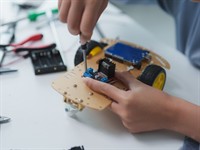
engineering — [ˌen.dʒɪˈnɪə.rɪŋ] — a subject where students learn how to design, build and improve machines, structures and systems; inženierzinības
Engineering challenges students to design bridges, robots or inventions that could solve real-life problems.

geometry — [dʒiˈɒm.ə.tri] — a part of mathematics about shapes, lines, angles, space and measurement; ģeometrija
Geometry helps students understand how architects design buildings, bridges and amazing 3D spaces.

programming — [ˈprəʊ.ɡræm.ɪŋ] — a school subject where students write instructions that tell computers what to do; programmēšana
Programming allows students to create useful tools, solve problems and bring digital ideas to life.
After-school Clubs and Activities

coding club — [ˈkəʊ.dɪŋ klʌb] — an afterschool activity where students learn to write computer code and create digital projects; programmēšanas pulciņš
Coding club gives students a chance to build their own games, apps or websites.

drama club — [ˈdrɑː.mə klʌb] — an afterschool activity where students act, perform scenes and practise stage skills; teātra pulciņš
Drama club is perfect for students who enjoy stories, teamwork and performing in front of an audience.

robotics — [rəʊˈbɒt.ɪks] — a school subject or practical technology lesson where students design, build and control robots; robotika
Robotics combines creativity, technology and teamwork in exciting hands-on challenges.

school newspaper — [skuːl ˈnjuːzpeɪpə] — an afterschool activity where students write articles, take interviews and report school news; skolas avīze
School newspaper gives students a voice and helps them share important stories with the whole school.

student council — [ˈstjuːdnt ˈkaʊnsl] — a group of students who represent their classmates and help improve school life; skolēnu pašpārvalde
Student council helps students become responsible leaders and make positive changes at school.
Useful Phrases for Talking about Subjects and Interests
Use these phrases to explain what you like, what you want to learn more about and how different subjects or activities make you feel.
Many students are fascinated by robotics when they see a robot move for the first time.
Use these phrases to explain what you like, what you want to learn more about and how different subjects or activities make you feel.
be fascinated by — to be very interested in something because it seems unusual, exciting or amazing; būt sajūsminātam(ai) par ... / ļoti aizrauties ar ...
Many students are fascinated by robotics when they see a robot move for the first time.
be interested in — to want to learn more about something because you like it or enjoy it; interesēties par ... / būt ieinteresētam(ai) ...
Alex is interested in astronomy because he loves learning about planets and stars.
be keen on — to like something very much or enjoy doing it; ļoti patikt / aizrauties ar ...
Sara is keen on drama club because she enjoys acting and performing on stage.
discover a passion — to find something that you love doing and feel strongly excited about; atklāt aizraušanos / sirdslietu
After writing for the school newspaper, Emma discovered a passion for journalism.
explore an interest — to learn more about something you enjoy, often by trying activities or finding information; padziļināti pētīt savu interesi
Joining coding club is a great way to explore an interest in technology.
find something challenging — to think that something is difficult, but in a way that makes you try harder; uzskatīt kaut ko par izaicinošu / grūtu, bet attīstošu
Alex finds algebra challenging, but he feels proud when he solves a difficult equation.
find something useful — to think that something helps you or can be used in real life; uzskatīt kaut ko par noderīgu
Students often find programming useful because it helps them create websites, apps and games.