

Imagine you are coordinating a rocket launch. Every action must happen in the correct order or the mission fails. There are connectors — your mission control commands. For each connector, you will see:
The vibe — the feeling or situation where this connector is usually used. It helps you understand the idea quickly.
The rule — the logic of how the two actions are connected in time.
Together, the vibe helps you recognise the situation, and the rule helps you build the sentence correctly.
The vibe — the feeling or situation where this connector is usually used. It helps you understand the idea quickly.
The rule — the logic of how the two actions are connected in time.
Together, the vibe helps you recognise the situation, and the rule helps you build the sentence correctly.
The Instant Trigger
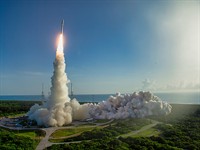
as soon as — used to show that one action happens immediately after another action in the future. There is no delay between the two actions; tiklīdz
As soon as the sensors detect a clear sky, we will launch the rocket.
The vibe: high energy, immediate action.
The rule: no waiting around. Action A triggers action B instantly.
The rule: no waiting around. Action A triggers action B instantly.
The Backup Plan
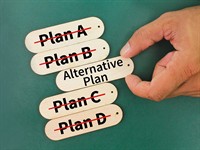
in case — used to show that we do something now because something might happen in the future. It expresses precaution or preparation; gadījumā, ja ...
Pack extra oxygen in case the mission lasts longer than expected.
The vibe: the cautious professional.
The rule: you do something now so you aren't stuck later.
The Gatekeeper

until — used to show that an action continues up to a certain moment in the future. The action stops when that moment happens; līdz, kamēr
The crew will stay inside until everything is safe.
The vibe: patience and precision.
The rule: you are stuck in "state A" until "event B" unlocks the door.
The Deadline

by the time — used to show that something happens before a certain moment in the future or before another future action happens;; līdz (tam) laikam, kad ...
By the time we reach Mars, we will travel for seven months.
The vibe: the big picture / the finish line.
The rule: this is the "race against the clock" connector.
The Safety Check

before — used to show that one action happens earlier than another future action. It indicates the correct order of events; pirms
Check everything before you launch the rocket.
The vibe: prevention and protocol.
The rule: order of operations is everything.
Timeline Problem

Something sounds strange… Look at these two sentences:
As soon as the weather will improve, we will launch the rocket.
As soon as the weather improves, we will launch the rocket.
Which one sounds correct? When we talk about the future, it feels natural to use "will" everywhere. But English has a special rule:
As soon as the weather improves, we will launch the rocket.
Which one sounds correct? When we talk about the future, it feels natural to use "will" everywhere. But English has a special rule:
After time connectors (as soon as, until, before, by the time, in case), we usually use Present Simple, even if we talk about the future.
Let's take a look at those two sentences again. Now, based on the rule, you know that the correct one is number 2.
- As soon as the weather will improve, we will launch the rocket.
- As soon as the weather improves, we will launch the rocket.
Let's look deeper!

This sentence has two parts.
1. Future time clause: As soon as the weather improves ...
This part tells when the action will happen. It:
- begins with a time connector (as soon as);
- uses Present Simple (improves);
- describes the future situation.
2. Main clause: ... we will launch the rocket
This part tells what action will happen in the future. It:
- uses Future Simple with "will + verb";
- gives the main result.
Pay attention — comma rule
Svarīgi!
When the future time clause is at the beginning of the sentence — use a comma.
As soon as the lesson finishes, we will start the test.
Before the lesson starts, check your homework.
As soon as the lesson finishes, we will start the test.
Before the lesson starts, check your homework.
Svarīgi!
When the future time clause is at the end of the sentence — do not use a comma.
We will start the test as soon as the lesson finishes.
Check your homework before the lesson starts.
We will start the test as soon as the lesson finishes.
Check your homework before the lesson starts.
Revise how to form the Present Simple tense. You studied this in form 3: Formating and usage of Present Simple