

Think: can one word mean different things in different countries?
In the USA, a public school is usually paid for by the government.
In Britain, it is an expensive type of private school (a school paid for by parents and not by the government)
In the USA, a public school is usually paid for by the government.
In Britain, it is an expensive type of private school (a school paid for by parents and not by the government)
In this unit, you will learn how school types can change from country to country.
Revise: you already know about the types of schools that are in the United Kingdom. Take a look again: Schools in the UK
Learn: now let's look into the United States of America and Australia. Read and listen.
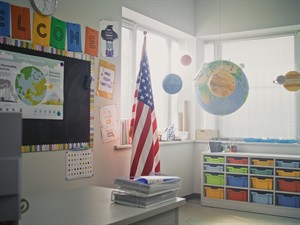
Schools in the USA can be different from one another. Many children go to public schools, which are paid for by public money. Some students go to private schools, where families usually pay for studies. There are also charter schools, which are public schools with more choice in how they work. Younger children usually go to an elementary school, then many students go to middle school, and later they attend high school.
Many children in the USA start elementary school when they are about six years old.
elementary school — [ˌelɪˈmentri skuːl] — in the US, a school for children between the ages of about 6 and 12; sākumskola, pamatskolas sākumposms
Many children in the USA start elementary school when they are about six years old.
charter school — [ˈtʃɑːtə skuːl] — in the US, a school that is paid for with public money but is organized by a private group for a special purpose and admits only students who meet its standards; čārterskola, valsts finansēta skola ar īpašu pārvaldības modeli
Some families choose a charter school because it may offer a special programme in science, arts or languages.
high school (informal: high) — [ˈhaɪ ˌskuːl] — a school in the US for older children, usually children from grades 9-12, or aged approximately 14-18; vidusskola
In the USA, students usually attend high school before they go to college or university.
middle school — [ˈmɪd.əl ˌskuːl] — in parts of the US, a school for children between the ages of about 11 and 13; skola / izglītības posms starp sākumskolu un vidusskolu; parasti 6.–8. klase ASV
After elementary school, many students in the USA go to middle school for a few years.
public school — [ˌpʌb.lɪk ˈskuːl] — in Scotland, Australia, and the US, a free school provided by the government; valsts skola, bezmaksas skola (kuru finansē vietējā pašvaldība)
In the USA and Australia, a public school is paid for with public money.
private school (also independent school) — [ˌpraɪ.vət ˈskuːl] — a school that does not get money from the government; privātskola
At a private school, families usually pay fees for their children’s education.
public money — [ˈpʌblɪk ˈmʌni] — money from the government, used to pay for public services; publiskais finansējums
A government school is paid for with public money.
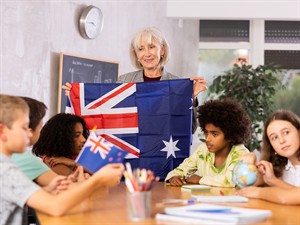
The Australian school system has different kinds of schools. Many students go to government schools, which are paid for with public money. Other students go to private schools, where families usually pay fees. Some private schools are Catholic schools or other religious schools. Some schools are for younger children, some are for older students, and some teach both age groups. There are also special schools for students who need extra support. Some students can also study through distance education when they cannot regularly go to a local school.
Catholic school — [ˈkæθəlɪk skuːl] — a school that includes instruction in Roman Catholic faith in its curriculum, with teachers who are often nuns or monks; katoļu skola
During the school concert, the Catholic school choir performed in a beautiful old church.
distance education — [ˈdɪs.təns ˌedʒ.uˈkeɪ.ʃən] — learning from home or another place when a student cannot regularly go to school; tālmācība
Through distance education, a student on a remote island can join lessons without leaving home.
government school — [ˈɡʌvənmənt skuːl] — a school that is paid for with public money; valsts skola
At the government school, pupils prepared a science exhibition for the whole community.
religious school — [rɪˈlɪdʒəs skuːl] — a school connected with a religion; reliģiska skola
A religious school may teach students about faith and values.
special school — [ˈspeʃl skuːl] — a school for students who need extra support with learning or daily school life; speciālā skola
A special school can help students learn through smaller classes, calm routines and practical activities.