

A mysterious message has appeared on your screen. It is written in a special code. How much of it can you decode before you begin the unit?

hɛˈləʊ! kən jʊ riːd ðɪs ˈmɛsɪʤ?
ət fɜːst, ðə ˈsɪmbᵊlz meɪ lʊk laɪk ə ˈsiːkrət kəʊd.
bət iːʧ ˈsɪmbᵊl ˌrɛprɪˈzɛnts ə saʊnd.
baɪ ði ɛnd əv ðɪs ˈjuːnɪt, jʊ wɪl bi ˈeɪbᵊl tə ˈdiːkəʊd ɪt!
ət fɜːst, ðə ˈsɪmbᵊlz meɪ lʊk laɪk ə ˈsiːkrət kəʊd.
bət iːʧ ˈsɪmbᵊl ˌrɛprɪˈzɛnts ə saʊnd.
baɪ ði ɛnd əv ðɪs ˈjuːnɪt, jʊ wɪl bi ˈeɪbᵊl tə ˈdiːkəʊd ɪt!
Problem: at first glance, this message may look like a secret code. However, these unusual symbols have a very practical purpose: they show us how words are pronounced. English spelling can sometimes be misleading. Words may contain letters that we do not pronounce, and the same letters can represent different sounds in different words. This means that reading a word is not always enough to know exactly how it should sound.
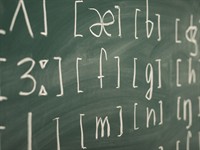
Solution: the International Phonetic Alphabet, usually shortened to IPA, helps us solve this problem. It is a system of symbols used to represent sounds. When you look up a word in a dictionary, its phonetic transcription shows you how to pronounce it. Learning the symbols can help you pronounce unfamiliar words more confidently and notice important differences between English sounds.
Revise: however, you already know quite a few things back from Form 1, don't you: Alphabet
Learn: watch the video to find out more about the phonetic alphabet.
What Do You Need to Remember?
Key Vocabulary
International Phonetic Alphabet (IPA) — [ˌɪntəˈnæʃᵊnᵊl fəʊˈnɛtɪk ˈælfəbɛt] — a system of symbols used to show how words are pronounced; starptautiskais fonētiskais alfabēts
phonetic symbol — [fəʊˈnɛtɪk ˈsɪmbᵊl] — a symbol that represents a particular sound. For example, /ʃ/ represents the sound at the beginning of "shop"; fonētiskais simbols
phonetic transcription — [fəʊˈnɛtɪk trænˈskrɪpʃᵊn] — a written representation of how a word is pronounced. For example, the phonetic transcription of "cat" is /kæt/; fonētiskā transkripcija
sound — [saʊnd] — a part of a spoken word that we can hear and pronounce. Letters and sounds are not always the same. For example, the word "phone" begins with the letter p, but its first sound is /f/; skaņa
vowel — [vaʊəl] — a sound made without blocking the flow of air through the mouth. For example, /æ/ in "cat" and /iː/ in "read" are vowel sounds; patskanis
consonant — [ˈkɒnsənənt] — a sound made by partly or completely blocking the flow of air through the mouth. For example, /p/ in "panda" and /ʃ/ in "short" are consonant sounds; līdzskanis
long vowel — [lɒŋ vaʊəl] — a vowel sound that is pronounced for a longer time. In phonetic transcription, the symbol /ː/ shows that a vowel is long. Compare /ɪ/ in "sit" and /iː/ in "read"; garais patskanis
diphthong — [ˈdɪfθɒŋ] — a vowel sound formed by moving from one sound to another. For example, /eɪ/ is the vowel sound in "play", and /aɪ/ is the vowel sound in "kite"; divskanis
schwa — [ʃwɑː] — a short, relaxed vowel sound represented by the symbol /ə/. It is one of the most common sounds in English. For example, the final sound in "America" is /ə/; vājā forma
syllable — [ˈsɪləbᵊl] — a part of a word that contains one vowel sound. For example, "tiger" has two syllables: ti-ger; zilbe
stress — [strɛs] — the extra emphasis placed on one syllable in a word. The stressed syllable sounds stronger and clearer than the other syllables; uzsvars
stress mark — [strɛs mɑːk] — the symbol /ˈ/, which shows which syllable is stressed. It appears immediately before the stressed syllable. For example, "tiger" is pronounced /ˈtaɪ.ɡə/, while "guitar" is pronounced /ɡɪˈtɑː/; uzsvara zīme
silent letter — [ˈsaɪlənt ˈlɛtə] — a letter that appears in the spelling of a word but is not pronounced. For example, the letter "l" is silent in "walk"; neizrunājams burts
International Phonetic Alphabet (IPA) — [ˌɪntəˈnæʃᵊnᵊl fəʊˈnɛtɪk ˈælfəbɛt] — a system of symbols used to show how words are pronounced; starptautiskais fonētiskais alfabēts
phonetic symbol — [fəʊˈnɛtɪk ˈsɪmbᵊl] — a symbol that represents a particular sound. For example, /ʃ/ represents the sound at the beginning of "shop"; fonētiskais simbols
phonetic transcription — [fəʊˈnɛtɪk trænˈskrɪpʃᵊn] — a written representation of how a word is pronounced. For example, the phonetic transcription of "cat" is /kæt/; fonētiskā transkripcija
sound — [saʊnd] — a part of a spoken word that we can hear and pronounce. Letters and sounds are not always the same. For example, the word "phone" begins with the letter p, but its first sound is /f/; skaņa
vowel — [vaʊəl] — a sound made without blocking the flow of air through the mouth. For example, /æ/ in "cat" and /iː/ in "read" are vowel sounds; patskanis
consonant — [ˈkɒnsənənt] — a sound made by partly or completely blocking the flow of air through the mouth. For example, /p/ in "panda" and /ʃ/ in "short" are consonant sounds; līdzskanis
long vowel — [lɒŋ vaʊəl] — a vowel sound that is pronounced for a longer time. In phonetic transcription, the symbol /ː/ shows that a vowel is long. Compare /ɪ/ in "sit" and /iː/ in "read"; garais patskanis
diphthong — [ˈdɪfθɒŋ] — a vowel sound formed by moving from one sound to another. For example, /eɪ/ is the vowel sound in "play", and /aɪ/ is the vowel sound in "kite"; divskanis
schwa — [ʃwɑː] — a short, relaxed vowel sound represented by the symbol /ə/. It is one of the most common sounds in English. For example, the final sound in "America" is /ə/; vājā forma
syllable — [ˈsɪləbᵊl] — a part of a word that contains one vowel sound. For example, "tiger" has two syllables: ti-ger; zilbe
stress — [strɛs] — the extra emphasis placed on one syllable in a word. The stressed syllable sounds stronger and clearer than the other syllables; uzsvars
stress mark — [strɛs mɑːk] — the symbol /ˈ/, which shows which syllable is stressed. It appears immediately before the stressed syllable. For example, "tiger" is pronounced /ˈtaɪ.ɡə/, while "guitar" is pronounced /ɡɪˈtɑː/; uzsvara zīme
silent letter — [ˈsaɪlənt ˈlɛtə] — a letter that appears in the spelling of a word but is not pronounced. For example, the letter "l" is silent in "walk"; neizrunājams burts
- Letters and sounds are not the same thing. A word may contain letters that are not pronounced, as in "walk".
- English has 44 sounds: 24 consonant sounds and 20 vowel sounds.
- Many phonetic symbols look familiar, but some symbols may be new. For example, /ʃ/ represents the sound at the beginning of "shop", while /θ/ represents the sound at the beginning of "think".
- The symbol /ː/ shows that a vowel sound is long. Compare /ɪ/ in "sit" and /iː/ in "read".
- The symbol /ˈ/ appears before the stressed syllable. It shows which part of the word should be pronounced more strongly.
- The sound /ə/ is called the schwa. It is a short, relaxed sound and one of the most common sounds in English.
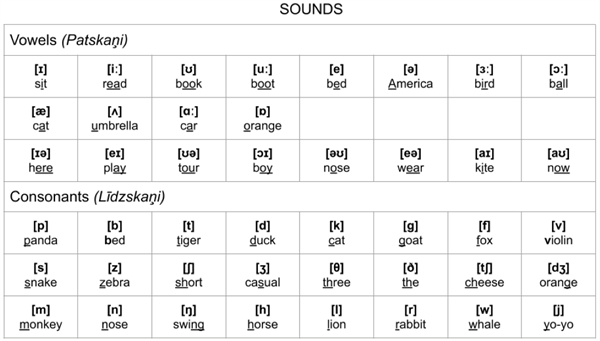
The chart below introduces the most common consonant and vowel sounds used in British English. Each symbol is accompanied by an example word. The underlined letters show which part of the word produces the sound.
Can You Crack the Code Now?
hɛˈləʊ! kən jʊ riːd ðɪs ˈmɛsɪʤ?
ət fɜːst, ðə ˈsɪmbᵊlz meɪ lʊk laɪk ə ˈsiːkrət kəʊd.
bət iːʧ ˈsɪmbᵊl ˌrɛprɪˈzɛnts ə saʊnd.
baɪ ði ɛnd əv ðɪs ˈjuːnɪt, jʊ wɪl bi ˈeɪbᵊl tə ˈdiːkəʊd ɪt!
ət fɜːst, ðə ˈsɪmbᵊlz meɪ lʊk laɪk ə ˈsiːkrət kəʊd.
bət iːʧ ˈsɪmbᵊl ˌrɛprɪˈzɛnts ə saʊnd.
baɪ ði ɛnd əv ðɪs ˈjuːnɪt, jʊ wɪl bi ˈeɪbᵊl tə ˈdiːkəʊd ɪt!
Hello! Can you read this message?
At first, the symbols may look like a secret code.
But each symbol represents a sound.
By the end of this unit, you will be able to decode it!
At first, the symbols may look like a secret code.
But each symbol represents a sound.
By the end of this unit, you will be able to decode it!
Atsauce:
English with Greg "BASIC Phonetics | Understanding The International Phonetic Alphabet" on youtube.com