

Read the text about life in Qaanaaq, a village in northern Greenland. Then answer the multiple-choice questions.
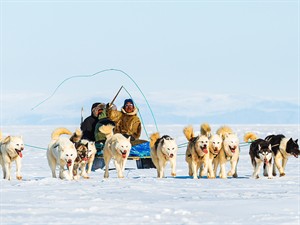
Qaanaaq is a small settlement in northern Greenland. It is one of the northernmost inhabited places in the world, and life there is very different from life in most European towns. The village stands near the sea, with mountains, snow, ice and open Arctic space around it. For visitors, this landscape may look beautiful and peaceful. For the people who live there, however, it is also part of everyday life. The weather, the sea ice, the light and the long distances all influence how people travel, work, eat and spend time with each other.
One of the first things that makes Qaanaaq special is the extreme change between darkness and light. During part of the winter, the sun does not rise above the horizon for weeks. This period is often called polar darkness. It does not mean that every moment is completely black, but daily life has to continue with very little natural light. People still go to school, go to work, visit neighbours and do necessary tasks. In summer, the opposite happens: the sun stays in the sky for a very long time, even during the night. This is known as the midnight sun. For someone who is not used to it, sleeping can feel strange when the world outside is still bright.
Transport in Qaanaaq also depends strongly on the season. There are no long roads connecting it to big cities. In winter, when the sea ice is strong enough, dog sleds can still be used. They are not only a tourist attraction; in this part of Greenland, they are connected with older ways of travelling and hunting. Snowmobiles are also used, and boats become important when the sea is open. Because the village is so remote, people cannot simply drive to another town whenever they want. Weather conditions can change plans quickly, so patience is part of life.
Food is another important part of the story. In many modern places, people take food in shops for granted. In Qaanaaq, supplies from outside can be limited, and traditional hunting still plays an important role. Local hunters may hunt animals such as seals or narwhals, and the catch can support families and the wider community. This does not mean that life has not changed. People also use modern technology, buy some food from shops and communicate with others online. Still, the natural environment remains closely connected with survival, identity and tradition.
Daily routines in Qaanaaq may seem ordinary in some ways. Children and teenagers go to school. Adults have jobs, families prepare meals, and people meet friends or relatives. At the same time, ordinary activities happen in extraordinary conditions. Going outside may require warm layers of clothing. A simple journey may depend on the weather. A dark winter day may affect people’s energy, while the bright summer nights may change their sleeping habits. Because of this, people learn to adjust to the rhythm of the Arctic.
Community life is very important in a small and remote place. When only a few hundred people live in an area, people often know each other well. Help from neighbours can be valuable, especially when the climate is harsh or travel is difficult. Sharing knowledge is also important. Older people may pass on skills connected with weather, ice, animals and safe travel. These skills are not just interesting traditions from the past. In a polar climatic zone, they can still be useful in real situations.
One of the first things that makes Qaanaaq special is the extreme change between darkness and light. During part of the winter, the sun does not rise above the horizon for weeks. This period is often called polar darkness. It does not mean that every moment is completely black, but daily life has to continue with very little natural light. People still go to school, go to work, visit neighbours and do necessary tasks. In summer, the opposite happens: the sun stays in the sky for a very long time, even during the night. This is known as the midnight sun. For someone who is not used to it, sleeping can feel strange when the world outside is still bright.
Transport in Qaanaaq also depends strongly on the season. There are no long roads connecting it to big cities. In winter, when the sea ice is strong enough, dog sleds can still be used. They are not only a tourist attraction; in this part of Greenland, they are connected with older ways of travelling and hunting. Snowmobiles are also used, and boats become important when the sea is open. Because the village is so remote, people cannot simply drive to another town whenever they want. Weather conditions can change plans quickly, so patience is part of life.
Food is another important part of the story. In many modern places, people take food in shops for granted. In Qaanaaq, supplies from outside can be limited, and traditional hunting still plays an important role. Local hunters may hunt animals such as seals or narwhals, and the catch can support families and the wider community. This does not mean that life has not changed. People also use modern technology, buy some food from shops and communicate with others online. Still, the natural environment remains closely connected with survival, identity and tradition.
Daily routines in Qaanaaq may seem ordinary in some ways. Children and teenagers go to school. Adults have jobs, families prepare meals, and people meet friends or relatives. At the same time, ordinary activities happen in extraordinary conditions. Going outside may require warm layers of clothing. A simple journey may depend on the weather. A dark winter day may affect people’s energy, while the bright summer nights may change their sleeping habits. Because of this, people learn to adjust to the rhythm of the Arctic.
Community life is very important in a small and remote place. When only a few hundred people live in an area, people often know each other well. Help from neighbours can be valuable, especially when the climate is harsh or travel is difficult. Sharing knowledge is also important. Older people may pass on skills connected with weather, ice, animals and safe travel. These skills are not just interesting traditions from the past. In a polar climatic zone, they can still be useful in real situations.
1. In the first paragraph, “landscape” refers to…
2. When the text says the sun does not rise above the “horizon,” it is referring to…
3. In the sentence about hunters, “the catch” refers to…
4. The word “survival” is used to show the connection between nature and…
Atsauce:
Picture “Dog sledge”: Kedardome / Shutterstock.com
Lai iesniegtu atbildi un redzētu rezultātus, Tev nepieciešams autorizēties. Lūdzu, ielogojies savā profilā vai reģistrējies portālā!