


PIRMĀ SEMESTRA NOSLĒGUMA TESTI
Travel back in time and discover the world’s oldest known book! Read the text carefully and learn how an ancient story survived thousands of years to reach modern readers. For questions 1–3, choose the correct answer.
Base your answers only on the information in the text.
"The Epic of Gilgamesh": The Oldest Book in the World
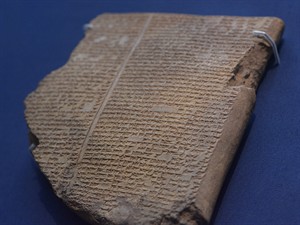
Many people are surprised to learn that the oldest known book in the world was written more than 4,000 years ago. It is called "The Epic of Gilgamesh", and it comes from ancient Mesopotamia, an area that is now part of modern-day Iraq. The story is so old that it was created long before paper, printing machines, or even most writing systems we use today.
"The Epic of Gilgamesh" tells the adventures of Gilgamesh, a strong and sometimes selfish king who rules the city of Uruk. At the beginning of the story, he is proud and believes he can do anything he wants. But when he meets a wild man named Enkidu, the two become close friends, and Gilgamesh begins to change. Together, they travel through dangerous forests, fight powerful creatures, and face challenges that test their strength.
One of the most important parts of the story happens when Gilgamesh loses someone close to him. This experience leads him to ask a difficult question: What does it mean to be human? He begins a long journey to discover whether people can live forever. Although he never finds eternal life, he learns lessons about friendship, duty, and enjoying the time we have.
The story is also very interesting because of the way it was written. Instead of using paper, ancient writers recorded the story on clay tablets. They used a writing system called "cuneiform", which is made up of small wedge-shaped marks pressed into soft clay with a simple instrument. After the tablets dried, they became strong and could stay safe for thousands of years. Thanks to this method, many parts of the story are still readable today.
People who study ancient objects found the tablets in the 1800s while exploring the ruins of ancient cities. Many tablets were damaged or broken, so experts had to put the pieces together like a giant puzzle. Translating the story took many years, because the language used in the tablets had not been spoken for a very long time. When the researchers finally understood it, they realised they had found one of the oldest and most important stories in human history.
Today, "The Epic of Gilgamesh" is studied all over the world. Students read it to learn about ancient civilisation, mythology, and early storytelling. Even though modern readers live thousands of years after it was written, many of the story’s main ideas — friendship, fear, brave behaviour, losing someone, and the search for meaning still feel modern and real. "The Epic of Gilgamesh" shows that people in the past wondered about the same things we do today.
This ancient story reminds us that books are more than just objects. They are a way to connect with the thoughts and feelings of people who lived long before us. Even in a digital world full of screens and fast information, "The Epic of Gilgamesh" continues to encourage readers and stays an important link to our shared human history.
"The Epic of Gilgamesh" tells the adventures of Gilgamesh, a strong and sometimes selfish king who rules the city of Uruk. At the beginning of the story, he is proud and believes he can do anything he wants. But when he meets a wild man named Enkidu, the two become close friends, and Gilgamesh begins to change. Together, they travel through dangerous forests, fight powerful creatures, and face challenges that test their strength.
One of the most important parts of the story happens when Gilgamesh loses someone close to him. This experience leads him to ask a difficult question: What does it mean to be human? He begins a long journey to discover whether people can live forever. Although he never finds eternal life, he learns lessons about friendship, duty, and enjoying the time we have.
The story is also very interesting because of the way it was written. Instead of using paper, ancient writers recorded the story on clay tablets. They used a writing system called "cuneiform", which is made up of small wedge-shaped marks pressed into soft clay with a simple instrument. After the tablets dried, they became strong and could stay safe for thousands of years. Thanks to this method, many parts of the story are still readable today.
People who study ancient objects found the tablets in the 1800s while exploring the ruins of ancient cities. Many tablets were damaged or broken, so experts had to put the pieces together like a giant puzzle. Translating the story took many years, because the language used in the tablets had not been spoken for a very long time. When the researchers finally understood it, they realised they had found one of the oldest and most important stories in human history.
Today, "The Epic of Gilgamesh" is studied all over the world. Students read it to learn about ancient civilisation, mythology, and early storytelling. Even though modern readers live thousands of years after it was written, many of the story’s main ideas — friendship, fear, brave behaviour, losing someone, and the search for meaning still feel modern and real. "The Epic of Gilgamesh" shows that people in the past wondered about the same things we do today.
This ancient story reminds us that books are more than just objects. They are a way to connect with the thoughts and feelings of people who lived long before us. Even in a digital world full of screens and fast information, "The Epic of Gilgamesh" continues to encourage readers and stays an important link to our shared human history.
1. What does the text suggest about the writing method used for "The Epic of Gilgamesh"?
2. What does the story show about the people who lived thousands of years ago?
3. What does the way ancient writers recorded the story tell us about Mesopotamian society?
Lai iesniegtu atbildi un redzētu rezultātus, Tev nepieciešams autorizēties. Lūdzu, ielogojies savā profilā vai reģistrējies portālā!