


PIRMĀ SEMESTRA NOSLĒGUMA TESTI
Learn: have you ever wondered why some stories pull you in from the very first sentence… while others stay in your mind long after you close the book? Every piece of writing — from the shortest tale to the longest novel — follows a structure. Writers carefully build worlds, shape events, and guide readers through journeys filled with questions, surprises, and emotions. In this unit, you’ll explore how stories work and what makes them powerful. Ready to step behind the curtain and see how writers build their magic? Let’s dive in.
Word bank:

beginning — [bɪˈɡɪn.ɪŋ] — the first part of a story where the setting, characters, and basic situation are introduced; sākums, ievada daļa
The beginning didn’t reveal much, but it hinted just enough to make me suspicious in all the right ways.

chapter — [ˈtʃæp.tər] — a main section of a book, usually with its own title or number, that divides the story into smaller, organised parts; grāmatas nodaļa
The chapter ended with such a shocking sentence that I had no choice but to start the next one immediately.

character — [ˈkær.ək.tər] — a person, animal, or other figure in a story who takes part in the events and helps move the storyline forward; tēls, varonis
My favourite character wasn’t the hero. It was the quiet side character who turned out to be the smartest of them all.
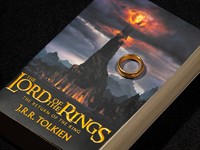
cover — [ˈkʌv.ər] — the outside part of a book that protects the pages and includes the title, author’s name, and often a picture; grāmatas vāks
When the book arrived, the cover looked even more beautiful than the online picture.

description — [dɪˈskrɪp.ʃən] — gives details about a person, place, or thing so you can picture it in your mind. It is also information about the book or the author on the back of the book; apraksts
The description of the mysterious house sent chills down my spine even before anything scary happened.
direct speech — [ˌdaɪ.rekt ˈspiːtʃ] — the exact words a person says, shown inside quotation marks ("") in writing; tiešā runa
Our teacher told us to replace some descriptions with direct speech, and suddenly the dialogue sounded much more natural.
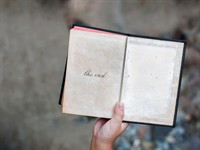
ending — [ˈen.dɪŋ] — the final part of a story where the events are concluded and the outcome of the plot becomes clear; grāmatas nobeigums
A good ending doesn’t just finish the story — it leaves you thinking long after you close the book.
excerpt — [ˈeksɜːpt] — a short piece of writing, music, film, etc. taken from a longer whole; izraksts no kāda teksta (mūzikas darba, filmas)
The excerpt we read in class was so gripping that everyone begged to know what happened in the full book.

glossary — [ˈɡlɒs.ər.i] — a list of technical or special words, especially those in a particular text, explaining their meanings; reti lietotu, grūti saprotamu vārdu skaidrojumu vai tulkojumu (glosu) saraksts, kas parasti mazas vārdnīcas veidā pievienots kādai grāmatai vai rokrakstam
The glossary at the back of the book saved me, without it, I would have had no idea what half the technical words meant.

message — [ˈmesɪdʒ] — an important moral, social or political idea that a book, speech, etc. is trying to communicate; galvenā doma
The message wasn’t obvious at first, but the final scene revealed exactly what the author wanted us to learn.

middle — [ˈmɪdl] — the part between the beginning and the end, where the main events happen. This section usually develops the plot, introduces problems or conflicts, and shows how characters react or change; galvenā daļa
Even though the beginning was slow, the middle made everything worth it — that’s where the story truly came alive.
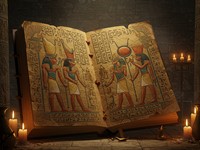
setting — [ˈsetɪŋ] — time and place of a story; vide, apkārtne, grāmatā tā ir informācija par laiku un vietu, kurā norisinās stāsta darbība
A strong setting can shape the whole mood of a story, whether it takes place in a quiet village or a futuristic city in the clouds.

solution — [səˈluː.ʃən] — the moment or part of the story where the problem is solved. It shows how the characters fix the situation, overcome obstacles, or resolve the conflict; atrisinājums
I thought the story would end badly, but the solution surprised me by being hopeful and smart at the same time.
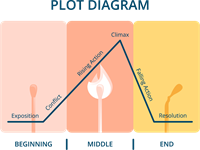
storyline — [ˈstɔː.ri.laɪn] — main events of a story; sižets, sižeta līnija
A strong storyline connects all the events in a story and makes the whole journey feel meaningful.
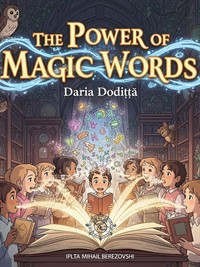
title — [ˈtaɪtl] — the name of a book; grāmatas, stāsta vai jebkura cita literāra darba nosaukums
A good title gives you a tiny hint about the story without revealing too much.
How do you structure a story?
Most stories are divided into three parts: a beginning, a middle, and an ending.
In the beginning, you introduce where the story takes place and who the characters are.
In the middle section, you can include challenges or a problem that needs to be solved.
In the final part, something important happens to resolve the situation, for example, a rescue or another solution. The ending may be joyful or tragic.
Most stories are divided into three parts: a beginning, a middle, and an ending.
In the beginning, you introduce where the story takes place and who the characters are.
In the middle section, you can include challenges or a problem that needs to be solved.
In the final part, something important happens to resolve the situation, for example, a rescue or another solution. The ending may be joyful or tragic.
Atsauce:
Picture "Harry Potter books" - Kittyfly / Shutterstock.com
Picture "Lord of rings" - Juan Alejandro Bernal / Shutterstock.com
Picture "Netherlands and Scandinavia" - joshimerbin / Shutterstock.com
Picture "Survival story" - Snap Spot / Shutterstock.com