

Read the article.
Izlasi tekstu!
Svarīgi!
If necessary, use the Internet to translate the unknown words! You don't need to understand all the words.
You are so close to becoming a True Weather Wizard, Apprentice! Now it’s time to use your final superpower: Reading Information. You already know that there are many myths about the weather, but can you spot the real facts?
Read the text about the weather in Great Britain very carefully. After reading, look at the sentences below and choose if they are True (pareizi), False (nepareizi), or Not Mentioned (tekstā nav minēts). Watch out for the sneaky traps and show off your wizard reading skills!
Read the text about the weather in Great Britain very carefully. After reading, look at the sentences below and choose if they are True (pareizi), False (nepareizi), or Not Mentioned (tekstā nav minēts). Watch out for the sneaky traps and show off your wizard reading skills!
Fact or Myth
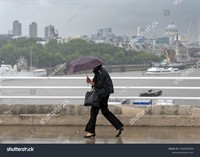
There is a big myth about the weather in Great Britain. Most people believe that it rains all the time in London, but this is not true. It rains just as much in many other European countries as it does in Britain. In fact, Hamburg in the north of Germany gets more rain than London in the south of Great Britain. November and December are the wettest months in England, but the British weather is very difficult to predict. Sometimes it rains during the summer, and a sudden shower starts. In winter, it often snows too, especially in the north of the British Isles, in Scotland. However, the snow doesn't last very long in the middle and in the southern part of Great Britain.
The weather changes because of the Atlantic Ocean and how far north a place is. Northern Ireland, Wales, and the western parts of England and Scotland are very close to the Atlantic Ocean. Because of this, they are usually the wettest and windiest parts of the UK, but the temperature here is normally mild and not too cold. On the other hand, eastern areas are drier, cooler, and less windy. They also have the biggest changes in temperature between day and night, or summer and winter. Northern areas are generally cooler and wetter, and their temperature changes more than in southern areas.
During the summer, there can sometimes be a very large difference in temperature between the far north of Scotland and the south-east of England. This difference is often 10-15°C, but sometimes it can be as much as 20°C or even more. In the middle of summer, the Northern Isles of Scotland can be quite chilly with temperatures around 15°C, while the areas around London can become boiling hot and reach 36°C.
However, Britain is warmer than other northern countries such as Denmark, Sweden, and Norway. Britain is even warmer than countries that are at the same level on the map, such as Poland, Belarus, Lithuania, Latvia, and Estonia. The weather in the UK is warmer because of the warm air that comes from the Atlantic Ocean. It is also because of the warm waters of the North Atlantic Drift (Ziemeļatlantijas straume).
The weather changes because of the Atlantic Ocean and how far north a place is. Northern Ireland, Wales, and the western parts of England and Scotland are very close to the Atlantic Ocean. Because of this, they are usually the wettest and windiest parts of the UK, but the temperature here is normally mild and not too cold. On the other hand, eastern areas are drier, cooler, and less windy. They also have the biggest changes in temperature between day and night, or summer and winter. Northern areas are generally cooler and wetter, and their temperature changes more than in southern areas.
During the summer, there can sometimes be a very large difference in temperature between the far north of Scotland and the south-east of England. This difference is often 10-15°C, but sometimes it can be as much as 20°C or even more. In the middle of summer, the Northern Isles of Scotland can be quite chilly with temperatures around 15°C, while the areas around London can become boiling hot and reach 36°C.
However, Britain is warmer than other northern countries such as Denmark, Sweden, and Norway. Britain is even warmer than countries that are at the same level on the map, such as Poland, Belarus, Lithuania, Latvia, and Estonia. The weather in the UK is warmer because of the warm air that comes from the Atlantic Ocean. It is also because of the warm waters of the North Atlantic Drift (Ziemeļatlantijas straume).
1. The western parts of the UK are the driest and less windy.
The statement is .
2. In the middle of summer, the Northern Isles of Scotland can reach 36°C.
The statement is .
Lai iesniegtu atbildi un redzētu rezultātus, Tev nepieciešams autorizēties. Lūdzu, ielogojies savā profilā vai reģistrējies portālā!