

Learn: museums are more than quiet buildings with old objects. They are places where history, science, and art come alive. In this unit, you will learn how to talk about different types of museums, understand museum services and describe important objects. By the end of the unit, you will be able to plan a museum visit, ask for information, and confidently explore exhibitions like a real visitor.
Revise: you studied about the museums in form 6. Revise here: At the Museum
Word bank
Part 1: General Vocabulary
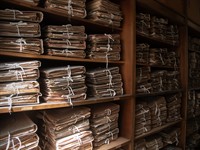
archive — [ˈɑːrkaɪv] — a collection of historical records or documents; arhīvs, vēsturisku materiālu kolekcija
The museum keeps old documents and photos in its archive.
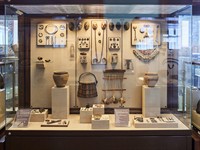
artefact (also: artifact) — [ˈɑː.tə.fækt] — an object made by people in the past; artefakts (senlaicīgs priekšmets ko radījuši cilvēki)
Each artefact tells a story about daily life in the past.
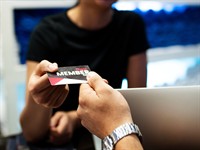
membership card — [ˈmem bərʃɪp kɑːd] — a small piece of plastic or stiff paper that shows you are a member of a group or organization; biedra karte kas apliecina piederību kādai organizācijai
Students can get discounts with a membership card.
Part 3: Museum Features and Services
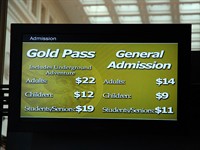
admission fee — [ədˈmɪʃ.ən fiː] — the money you pay to enter a museum; ieejas maksa
The admission fee for the museum is five euros, but students pay less.
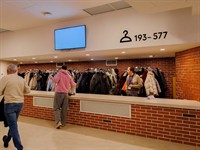
cloakroom — [ˈkləʊkruːm] — a room in a public building where people can leave coats, bags, etc. for a time; ģērbtuve
Visitors can leave their coats and bags in the cloakroom near the entrance.
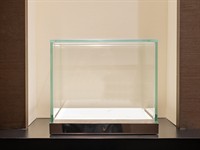
display case (also: display cabinet) — [dɪˈspleɪ keɪs] — a cupboard made or partly made of glass, for displaying items in a shop, museum, etc.; displejs, vitrīna
The ancient coin was kept in a glass display case to protect it.
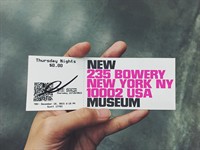
free admission — [friː ədˈmɪʃ.ən] — when entry to the museum does not cost anything; bezmaksas ieeja
The museum offers free admission on Sundays for all visitors.
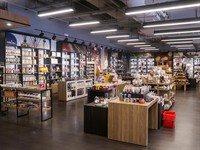
gift shop — [ˈɡɪft ʃɒp] — a shop that sells souvenirs and small items that are suitable for giving as presents; suvenīru veikals
After the exhibition, we bought postcards and souvenirs in the museum gift shop.
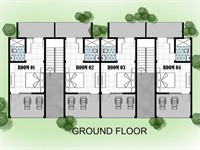
the ground floor — [ˌɡraʊnd ˈflɔːr] — (Bitish English) the floor of a building that is at the same level as the ground outside. In American English the same floor is called the first floor; pirmais stāvs
The information desk and the cloakroom are on the ground floor.
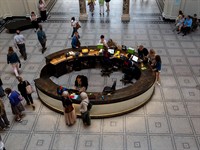
information desk — [ˌɪn.fəˈmeɪ.ʃən desk] — a place in a public building, store, etc. where you can go to get information, for example about where to find things in the building; informācijas centrs
If you need help or a museum map, ask at the information desk near the entrance.
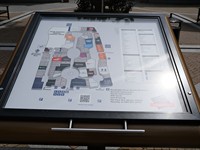
museum map — [mjuːˈziː.əm mæp] — a map showing the layout of the museum; muzeja plāns
The visitor used a museum map to find the exhibition hall and the gift shop.
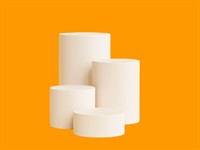
pedestal — [ˈpedɪstl] — the base that a column, statue, etc. rests on; pjedestāls, pamatne
The statue was placed on a pedestal so visitors could see it clearly.
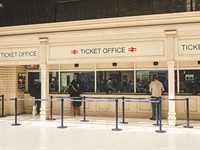
ticket office — [ˈtɪkɪt ˈɒfɪs] — a place, for example at a theatre, cinema, or railway station, where tickets are sold; kase
We bought our tickets at the ticket office before entering the museum.
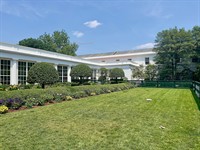
wing — [wɪŋ] — a part of a large building that sticks out from the main part, often having been added at a later date; (ēkas) spārns, piebūve
We spent most of our time in the history wing, where the oldest objects are displayed.
At the ticket office. Read and listen to the dialogue:
Clerk: Good morning. How can I help you? — Labrīt! Kā es varu Jums palīdzēt?
Visitor: Hi. I’d like one student ticket, please. — Sveiki. Es vēlētos vienu skolēna biļeti.
Clerk: Sure. The admission fee for students is five euros. Do you have a membership card? — Skolēniem ieejas maksa ir pieci eiro. Vai Jums ir biedra karte?
Visitor: Yes, I do. Here you go. — Jā, ir. Lūdzu, te būs.
Clerk: Thank you. That will be two euros. How would you like to pay? — Paldies. Tad kopā būs divi eiro. Kā Jūs vēlētos norēķināties?
Visitor: Can I pay by card? — Vai varu maksāt ar bankas karti?
Clerk: Yes, of course. Here’s your ticket and a museum map. — Jā, protams. Lūk, Jūsu biļete un muzeja plāns.
Visitor: Thank you. Is there a cloakroom where I can leave my coat? — Paldies. Vai šeit ir garderobe, kur varu atstāt mēteli?
Clerk: Yes, it’s just behind the information desk near the entrance. — Jā, tā atrodas aiz informācijas centra, netālu no ieejas.
Visitor: Great. What time does the museum close today? — Lieliski. Cikos muzejs šodien tiek slēgts?
Clerk: We’re open until six o’clock. — Muzejs ir atvērts līdz pulksten sešiem.
Visitor: Perfect. Is there a gift shop as well? — Perfekti! Vai te ir arī suvenīru veikals?
Clerk: Yes, it’s next to the exit. — Jā, tas ir pie izejas.
Visitor: Thanks a lot. — Liels paldies!
Clerk: You’re welcome. Enjoy your visit! — Lūdzu. Lai patīkams muzeja apmeklējums!
Atsauce:
Picture “Historical museum”: Natalia Kirsanova / Shutterstock.com
Picture “Ticket prices”: James Kirkikis / Shutterstock.com
Picture “Cloakroom”: Natalya Likhina / Shutterstock.com
Picture “Museum ticket”: Hoowy / Shutterstock.com
Pictur “Candle store”: John Arehart / Shutterstock.com
Picture “Reception”: Dorota Szymczyk / Shutterstock.com
Picture “Mall map”: WESLEY FOULDS / Shutterstock.com
Picture “Ticket office”: phaustov / Shutterstock.com
Picture “Ticket prices”: James Kirkikis / Shutterstock.com
Picture “Cloakroom”: Natalya Likhina / Shutterstock.com
Picture “Museum ticket”: Hoowy / Shutterstock.com
Pictur “Candle store”: John Arehart / Shutterstock.com
Picture “Reception”: Dorota Szymczyk / Shutterstock.com
Picture “Mall map”: WESLEY FOULDS / Shutterstock.com
Picture “Ticket office”: phaustov / Shutterstock.com