

Revise about Comparatives and Superlatives from studies before!
To talk and write about travel experiences, we use comparatives and superlatives.
Superlatives compare three or more things, showing which one is the most or least of a certain quality.
In short:
We use comparatives to compare two things (for example, one place is cheaper than another).
We use superlatives to compare three or more things (for example, the best holiday).
We use superlatives to compare three or more things (for example, the best holiday).
- Short adjectives use -er / -est (small — smaller — smallest).
- Adjectives ending in -y change to -ier / -iest (happy — happier — happiest).
- Long adjectives use more / most (more interesting / most interesting).
Article vs Video
Last week, I read an article and watched a video about healthy eating. Both gave useful information, but in different ways. The article was good because I could read it slowly and think about the ideas. The article guide was a health website, so I trusted it. Watching the video was more fun and more entertaining, especially because it had music and pictures. In my opinion, reading is better for learning details, but videos are better for quick ideas. The comfort of the video was important to me because I could watch it on my phone. The experience of watching the video was enjoyable, but the article helped me remember more facts. But both are useful. My choice depends on my time and mood. If I want clear facts, I choose an article. If I want something light and fun, I choose a video.
Word bank:

article — [ˈɑːtɪkəl] — noun; a piece of writing in a newspaper or magazine about a particular subject; raksts
I read a travel article about Paris in a magazine before planning my trip.

choice — [tʃɔɪs] — noun; the act of choosing something; izvēle
There is a wide choice of travel videos online.

comfort — [ˈkʌmfət] — noun; a pleasant feeling of being relaxed and free from pain; ērtības, komforts
The article talks about the comfort of travelling by train in the UK.

different — [ˈdɪf.ər.ənt] — adj, not the same; atšķirīgs
This project is quite different than anything we've done before.

entertaining — [en.təˈteɪ.nɪŋ] — adj; funny and enjoyable; izklaidējošs
Watching travel videos is entertaining because they are fun and colourful.

experience — [ɪkˈspɪərɪəns] — noun; knowledge or skill gained through doing, seeing or feeling things; pieredze
Watching travel videos gives a better experience of the place before travelling.

guide — [ɡaɪd] — noun; something that that gives you the most important information about a particular subject; ceļvedis
The travel guide explains what to see in Manchester.

information — [ˌɪnfəˈmeɪʃən] — noun; facts or details about a situation, person, or event; informācija
The travel article gave me a lot of useful information about London.

opinion — [əˈpɪnɪən] — noun; a thought or belief about something or someone; viedoklis
In my opinion, reading articles is better for learning details about a city.
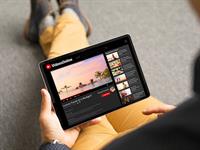
video — [ˈvɪdiəʊ] — noun; a recording of moving images and sound; video
I watched a travel video about Rome to see the city and learn quickly.
Atsauce:
Information: Pamela Brick / Shutterstock
Guide: Antlii / Shutterstock